
 In 2016, fall armyworm arrived in West and Central Africa. Within two years, it had spread across the continent. The pest has since become a major challenge for Nigerian maize farmers.
Fall armyworm has been recorded across Nigeria’s agroecological zones. In untreated maize fields, an outbreak can cause major yield losses within weeks.
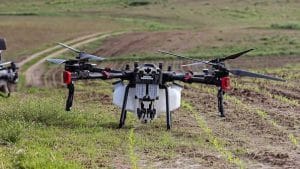
This challenge shows why precise pest control matters. Drone pesticide spraying in Nigeria gives farmers another way to manage pest outbreaks. When combined with safe agrochemical handling, it can improve response time, application efficiency and worker safety.
This guide explains how drone pesticide spraying supports pest control. It also covers safe agrochemical practices and how a Nigerian farm can approach an outbreak response.
Why Pest Control in Nigeria Is Changing
Research involving more than 700 smallholder farmers across five Nigerian agroecological zones found major gaps in fall armyworm control.
More than 40% of surveyed farmers took no action against fall armyworm infestations. Among farmers who did respond, most relied on chemical control. Some also used highly hazardous products without protective equipment.
These findings highlight the need for better pest management practices. Precision drone spraying can form part of that solution when farmers combine it with proper chemical safety.
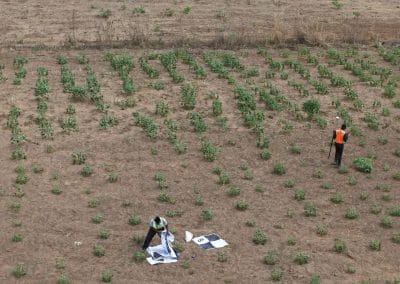
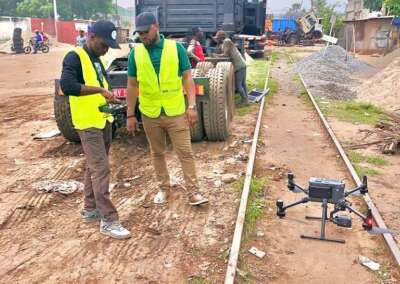
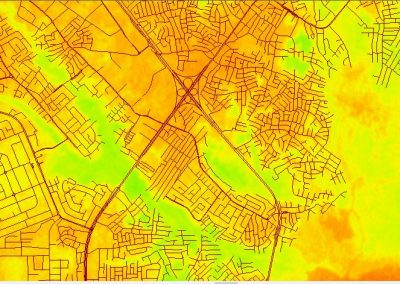
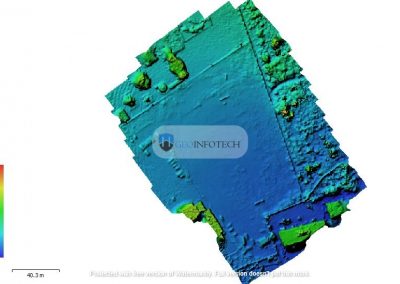
A documented Nigerian intervention provides an example. A fall armyworm outbreak affected maize during the important vegetative growth stage. The response began with a multispectral drone survey.
The survey helped identify the affected areas. The team then used drone-based insecticide application to treat the target area.
This approach follows a simple process:
- Survey the crop.
- Identify areas showing pest pressure or damage.
- Plan the treatment.
- Apply the approved product with the drone.
- Monitor the crop after treatment.
This assess-then-treat approach can help farmers avoid unnecessary blanket spraying.
Why Precision Matters for Pest Control
Effective pest control depends on getting the product to the target. Many pests hide under leaves, inside dense canopies or within plant whorls.
Fall armyworm, for example, can hide within the whorl of maize plants. This makes application quality particularly important.
Manual spraying can produce uneven coverage. Operator fatigue and inconsistent pressure can affect the amount of product reaching different parts of a field.
Drone spraying offers greater control over flight height and application paths. GPS-guided flight can also help maintain a consistent pattern across the treatment area.
Advanced spraying drones can use specialised atomisation systems. These systems produce controlled droplets designed for the specific application.
However, the correct settings depend on the product, crop and target pest. Farmers should always follow the product label and approved application instructions.
Faster Response During Pest Outbreaks
Timing is another major factor.
A drone can cover large areas in much less time than a manual spraying crew. As a result, farmers can respond more quickly when pest pressure increases.
This matters during fast-moving outbreaks. Delays can allow pests to spread into untreated sections of a farm.
By covering the affected area within a suitable treatment window, drone spraying can support faster pest management.
Precision Application and Reduced Chemical Use
Precision application can also reduce the amount of chemical and water required for some spraying operations.
Documented field results for fall armyworm control reported about a 30% reduction in pesticide use. The same results reported roughly a 90% reduction in water consumption compared with conventional spraying for the same control task.
These reductions can benefit farm operations in several ways.
First, lower input use can reduce spraying costs. This becomes more important when farmers need repeated treatments during an outbreak.
Second, lower water requirements can simplify field operations. Farmers may spend less time sourcing, transporting and preparing water for spraying.
Finally, using only the required amount of product can reduce unnecessary chemical loading in the surrounding environment.
Application rates must still follow the product label. Farmers should not reduce chemical rates simply because a drone uses less carrier volume.
Safe Agrochemical Application in Nigeria
Safe pesticide use involves more than the actual spraying operation.
The process starts with procurement. Pesticides used in Nigeria should come from verified sources and use properly registered formulations. Farmers should also confirm that the products they use are approved for their intended purpose.
Research has identified gaps in farmer knowledge about banned and restricted pesticide products. Therefore, sourcing agrochemicals through compliant channels is an important safety step.
Safe Pesticide Storage
Storage also requires careful attention.
Pesticides should remain in their original, labelled containers. They should be stored away from food, water, children and animals.
Improper storage creates risks even before spraying begins.
Farm operators should also keep chemicals in a secure area. The storage location should protect products from conditions that could damage their containers or labels.
Safe Mixing and Handling
Mixing is another important exposure point.
Research among smallholder farmers found that many reported direct skin contact with pesticides during mixing and application. This shows why chemical preparation needs the same level of care as spraying.
Workers should use appropriate protective equipment and follow the product label. They should also avoid unnecessary contact with concentrated chemicals.
Safe Drone Application
Drone technology changes the operator’s position during application.
Instead of walking through the treated field, the operator controls the drone from outside the active spray zone. This can reduce direct exposure during spraying.
However, drone spraying does not remove every chemical safety requirement.
Operators still need safe procedures for:
- Mixing pesticides
- Loading the spray tank
- Cleaning equipment
- Handling spills
- Transporting chemicals
- Storing products
- Disposing of empty containers
Proper Pesticide Disposal
Disposal completes the safety cycle.
Research in Nigeria has documented cases where farmers reused empty pesticide containers for domestic or agricultural purposes. This creates an additional contamination risk.
Empty pesticide containers should not be reused for food, water or other household purposes. Disposal should follow applicable product and regulatory guidance.
A professional spraying operation should therefore consider the entire chemical handling process, not only the drone flight.
Integrated Pest Management and Drone Spraying
Drone spraying works best as part of a wider pest management strategy.
Regular crop monitoring can help farmers detect pest pressure earlier. Multispectral drone imagery can support this monitoring by identifying changes in crop health.
Early detection can shift pest management from reactive treatment toward earlier intervention.
Other control methods can also support the process. These include resistant crop varieties, biological controls, cultural practices and biopesticide options.
Chemical treatment remains an important tool when farmers face active pest outbreaks. However, precision application can help make that treatment more targeted.
Timing also matters. Treatment should consider the pest’s life stage and the level of infestation.
Regular monitoring can therefore help farmers decide when treatment is necessary instead of relying only on a fixed spraying calendar.
Drone Pesticide Spraying Through Geoinfotech
Geoinfotech has agricultural drone experience in Nigeria. Its documented work includes rice farm operations in Kebbi and Benue States.
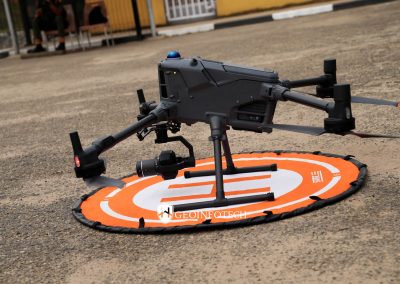
The company also uses the DJI Agras T50 spraying platform. Its work with multispectral crop health mapping supports an assess-then-treat approach.
This means farmers can first identify crop conditions and areas of concern. They can then plan targeted treatment based on the available field data.
For farms facing active pest pressure, this approach can help improve the spraying workflow.
Farm owners can also use drone spraying as part of a longer-term crop monitoring program. The exact approach should depend on the crop, pest, field conditions and approved treatment requirements.
How to Improve Pest Control With Drone Spraying
Before starting a drone pesticide spraying program, assess the farm carefully.
Start with the crop and target pest. Different pests and crops require different application approaches.
Next, review the field size and terrain. Large or difficult-to-access fields may benefit from faster aerial application.
Then consider the chemical product. The product label should guide application rate, safety requirements and other restrictions.
Finally, establish a monitoring process. Drone spraying works better when farmers know where pest pressure exists and when follow-up treatment may be required.
A qualified provider should also explain the planned flight settings and application method before beginning the operation.
Get Precision Pest Control Support From Geoinfotech
Geoinfotech can help farm owners assess their precision spraying requirements.
The team can consider factors such as crop type, field size, pest pressure and site conditions. This information can then guide the spraying plan.
Farm owners who currently rely on manual application can also start with selected fields. This allows them to evaluate drone spraying before developing a wider spraying program.
For precision pest control and agricultural drone spraying services, visit Geoinfotech to discuss your farm’s requirements.
The Bottom Line
Fall armyworm and other pests remain important challenges for Nigerian agriculture. Technology alone cannot solve every pest management problem.
However, drone pesticide spraying in Nigeria can support faster and more targeted crop protection. It can also reduce water use and keep operators away from the active spray zone during application.
The best results come from treating pest control as a complete system. That system includes crop monitoring, correct product selection, safe storage, careful mixing, precise application and proper disposal.
For Nigerian farmers, combining precision drone technology with responsible agrochemical practices can create a more controlled approach to modern crop protection.