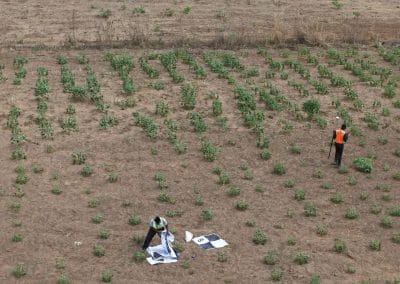

Nigeria’s cereal-producing regions face serious weed pressure. One major example is Striga, a parasitic weed also known locally as the violet vampire.
Striga has affected about 835,000 hectares of Nigerian maize farmland. In heavily infested fields, yield losses can reach 70% or more. Some surveys have also found infestation in more than 85% of maize fields in affected regions.
These figures show the scale of the challenge. They also explain why farmers need better weed management tools.
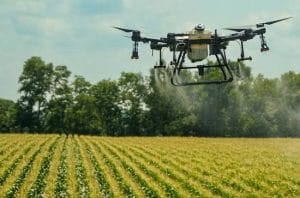
Drone herbicide spraying in Nigeria offers one option. It does not solve every weed problem. However, it can provide more precise herbicide application when foliar treatment is suitable.
This guide explains how drone herbicide spraying works. It also examines targeted application, crop protection, drift control and the limits of aerial herbicide treatment.
Why Herbicide Application Requires Precision
Herbicides are different from many other agricultural chemicals. They are designed to damage or kill plants.
As a result, herbicide drift can cause serious crop damage. A herbicide that targets weeds in one field may also damage a sensitive crop nearby.
This risk becomes more important in areas with mixed farming systems. Several crops may grow on neighbouring farms or within the same agricultural area.
For example, maize, rice, vegetables and other crops may exist close to one another. A poorly controlled spray can therefore affect plants that were never meant to receive the treatment.
Precision matters because farmers need to control weeds without unnecessarily exposing crops, waterways or neighbouring fields.
How Drone Herbicide Spraying Reduces Crop Damage
Modern drone spraying can go beyond simple aerial application. Some systems combine drone imagery with AI-based weed detection.
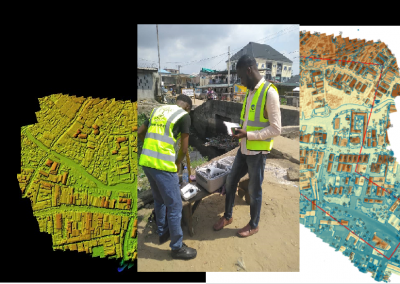
The process starts with aerial images of the field. Computer vision can then help identify areas with visible weed pressure.
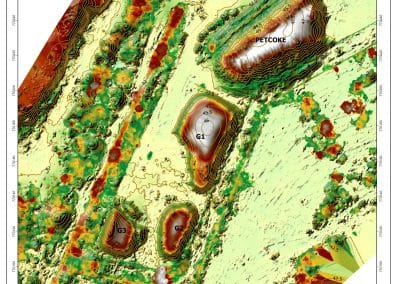
Instead of treating the entire field, the operator can create a weed map. The map can guide targeted application where the technology and herbicide allow it.
Research on smart spraying systems has reported weed control effectiveness of up to 96%. Some field demonstrations have also reported herbicide savings close to 50% when treatment focused on detected weed areas.
Other academic reviews of UAV-based targeted spraying report chemical-use reductions ranging from about 20% to 75% in some applications.
Results vary between crops, weeds, equipment and operating conditions. Therefore, these figures should not be treated as a guaranteed saving for every Nigerian farm.
Consistent Application From the Air
Drone spraying can also improve application consistency.
GPS-controlled flight paths help the aircraft follow planned routes. Consistent flight height can support more even spray distribution.
The drone also avoids driving wheels through standing crops. This removes the crop damage and soil compaction that ground equipment can cause.
These benefits can become particularly useful after crops have emerged.
Selective vs Non-Selective Herbicides
The type of herbicide matters when planning a drone mission.
Selective herbicides target specific weeds while causing limited damage to the intended crop when used correctly. However, they can still harm sensitive crops nearby.
Non-selective herbicides can damage most plants they contact. Therefore, drift control becomes especially important when using these products near crops.
Drone operators should identify the herbicide before planning the mission. The product label should guide application rate, droplet requirements, safety precautions and other restrictions.
Wind conditions and buffer zones also require careful attention. The acceptable conditions can differ between products and application situations.
What Drone Herbicide Spraying Cannot Fix
Drone technology is not a universal solution to every weed problem.
Striga provides an important example.
Striga is a parasitic weed that attacks crop roots below the soil surface. It can establish itself before farmers see the weed above ground.
By the time the characteristic purple flowers become visible, the crop may already have suffered significant damage.
For this reason, effective Striga management can involve several approaches. These include resistant or tolerant crop varieties, imidazolinone-coated seed treatments, crop rotation with legumes and soil fertility management.
Foliar herbicide spraying cannot replace these strategies.
Drone herbicide spraying can still help with many above-ground weeds. These include grass and broadleaf weeds in cereals, rice and vegetable production.
It can also support weed management in some irrigated rice systems.
However, farmers dealing with serious Striga pressure need a broader weed management strategy. A responsible provider should identify that distinction before recommending a spraying program.
Building a Precision Weed Control Program
Effective drone herbicide spraying starts before the drone takes off.
First, identify the weed problem. Knowing the weed species helps determine whether foliar herbicide treatment is appropriate.
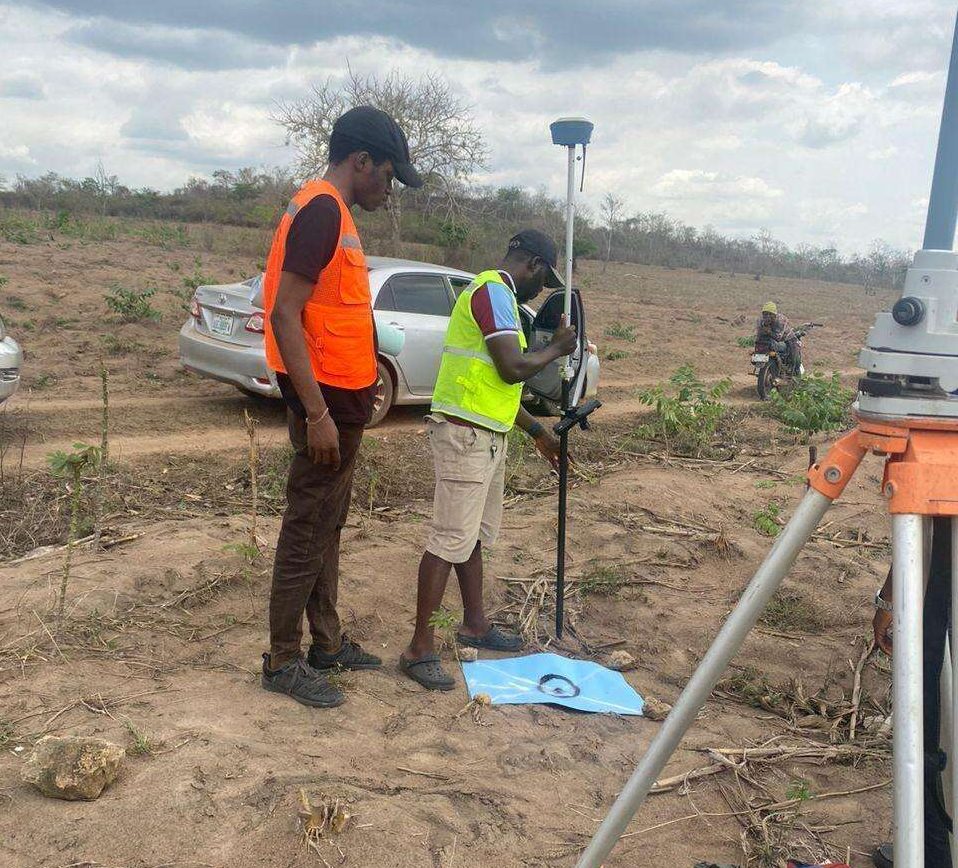
Next, map the field. A dedicated imaging flight can help show where weed pressure exists.
Weather conditions should also be checked before application. Wind speed and direction are especially important for herbicide missions because drift can damage sensitive crops.
The operator should monitor conditions throughout the flight. If conditions become unsuitable, the mission should be delayed.
Plan Buffer Zones
Buffer zones should form part of the flight plan.
Operators should identify nearby crops, water sources and other sensitive areas before takeoff. These areas can then be incorporated into the planned flight path.
Planning buffers in advance reduces the need for last-minute decisions during application.
Select the Right Nozzle and Droplet Size
Nozzle selection also affects herbicide performance.
Droplet size influences coverage and drift potential. Smaller droplets can increase drift risk, while larger droplets can provide better drift control in suitable applications.
The correct setting depends on the herbicide and application conditions. Operators should therefore follow the product label instead of using one generic setting for every chemical.
For some herbicide applications, coverage targets may fall within a specific droplet-density range. However, the required target should come from the product and application guidance being followed.
Precision Herbicide Application Through Geoinfotech
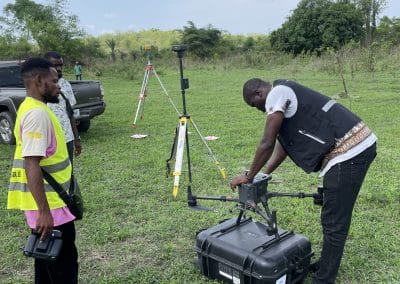
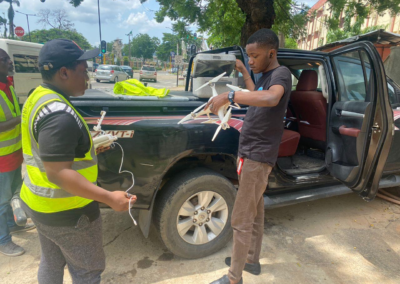
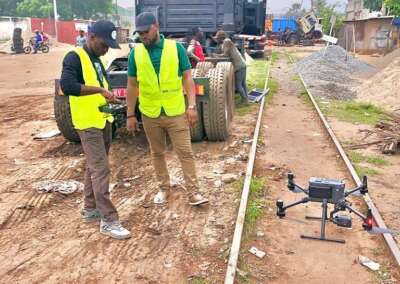
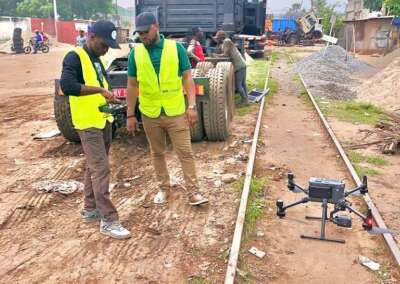
Geoinfotech has agricultural drone experience in Nigeria. Its documented work includes rice farm operations in Kebbi and Benue States.
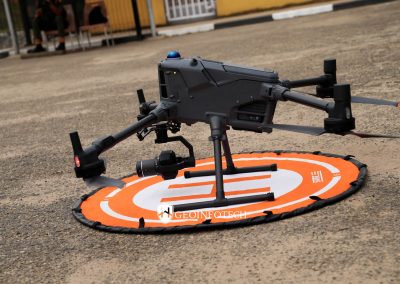
The company also uses the DJI Agras T50 spraying platform.
Its work in multispectral crop monitoring supports an identify-then-treat approach. Farmers can first assess crop conditions and identify areas that require attention.
The spraying plan can then respond to the actual field situation rather than relying only on blanket application.
This approach can be useful for farms dealing with grass and broadleaf weeds. It can also support weed management in suitable irrigated rice applications.
At the same time, different weed problems require different solutions.
For example, a farmer dealing with Striga may need resistant varieties, seed treatment, crop rotation or soil management. Precision spraying may not address the main cause of the problem.
Geoinfotech can assess the crop, field conditions and weed pressure before recommending an appropriate approach.
For precision herbicide application and agricultural drone services, visit Geoinfotech to discuss your farm requirements.
How to Improve Weed Control With Drone Spraying
A successful drone herbicide program requires more than a spraying drone.
Start by identifying the target weed. Then select an approved herbicide that is suitable for the crop and weed.
Next, assess the field and surrounding areas. Check nearby crops, waterways, buildings and other sensitive locations.
Review the weather before the mission. Wind conditions should remain within the limits required for the specific product and application.
Finally, monitor the results after treatment. Follow-up monitoring can show whether the target weeds were controlled and whether additional action is required.
This process helps turn drone spraying into a structured weed management program rather than a simple aerial spray operation.
The Bottom Line
Drone herbicide spraying in Nigeria can improve the precision and efficiency of weed control when foliar herbicide application is appropriate.
GPS-guided flight, controlled application and targeted weed mapping can help reduce unnecessary treatment. Drone application can also avoid the crop and soil damage associated with some ground equipment.
However, precision spraying cannot solve every weed problem.
Striga is a clear example. Because it attacks crop roots below the soil surface, farmers need broader management strategies that can include resistant varieties, seed treatments, crop rotation and soil fertility practices.
The right approach starts with identifying the actual weed problem. From there, farmers can choose between targeted drone spraying and other suitable weed management methods.
Precision technology delivers the most value when it is matched to the right agricultural problem.