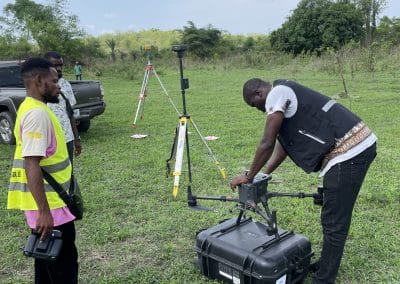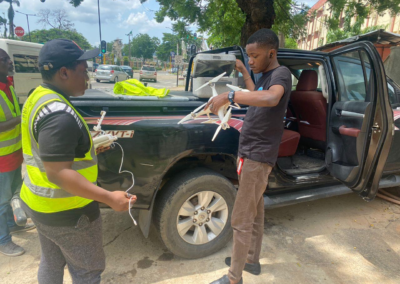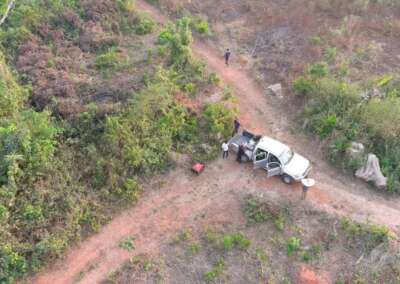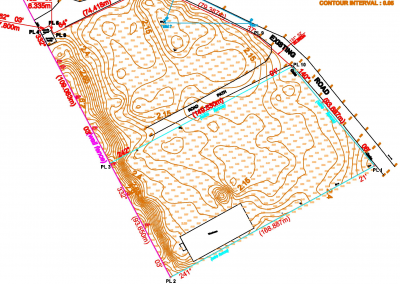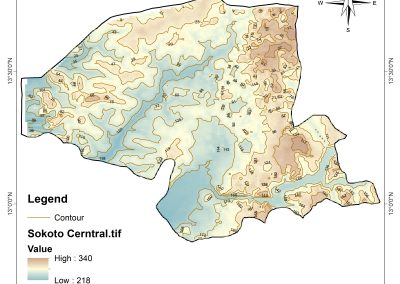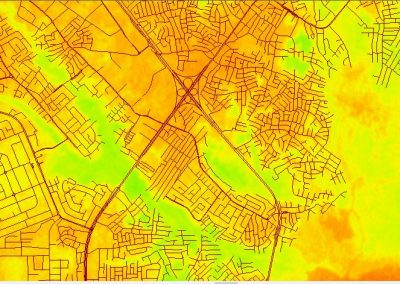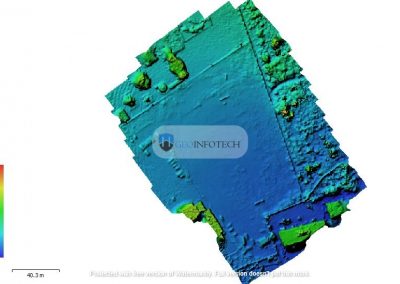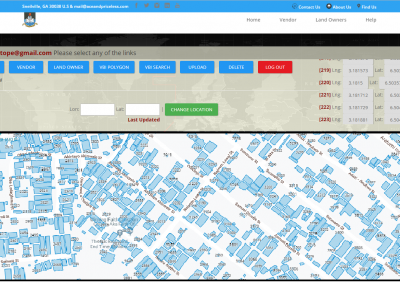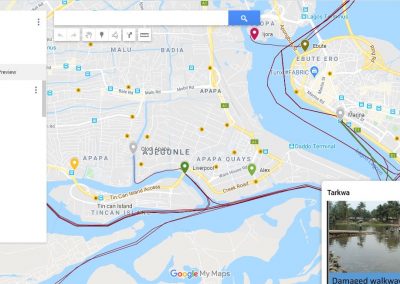

Abuja is one of the fastest-growing cities in Africa, with rapid development across districts such as Gwarinpa, Guzape, Maitama, and the Central Business District. As infrastructure and real estate projects expand, the demand for accurate land surveying data in the Federal Capital Territory continues to rise.
For surveyors, engineers, and property developers working in Abuja, precision is non-negotiable. In 2025, standard handheld GPS units are no longer sufficient for professional boundary surveys, topographic mapping, or construction staking. A high-performance GNSS receiver is essential for meeting project requirements and regulatory standards.
This guide explains how to choose the best GPS device for land survey projects in Abuja, considering accuracy, technology, durability, and local compliance.
Multi-Constellation GNSS Support Is Essential
Abuja’s urban environment presents signal challenges, particularly in areas with high-rise buildings such as Wuse and Garki, as well as hilly terrain around Aso Rock. Relying on GPS alone is not sufficient for consistent accuracy.
A professional survey GPS device should support multiple satellite constellations, including GPS, GLONASS, Galileo, and BeiDou. Multi-constellation tracking improves satellite availability, shortens fix time, and maintains accuracy under obstructions such as buildings and vegetation.
Receivers with high channel capacity, typically 800 channels or more, perform better in dense urban and semi-obstructed environments common across the FCT.
RTK or Static Surveying: Choosing the Right Mode
Land administration and cadastral surveys in Abuja, particularly those submitted to AGIS, require very high positional accuracy.
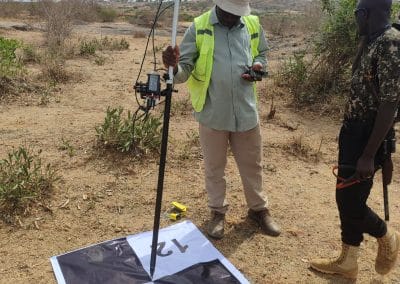
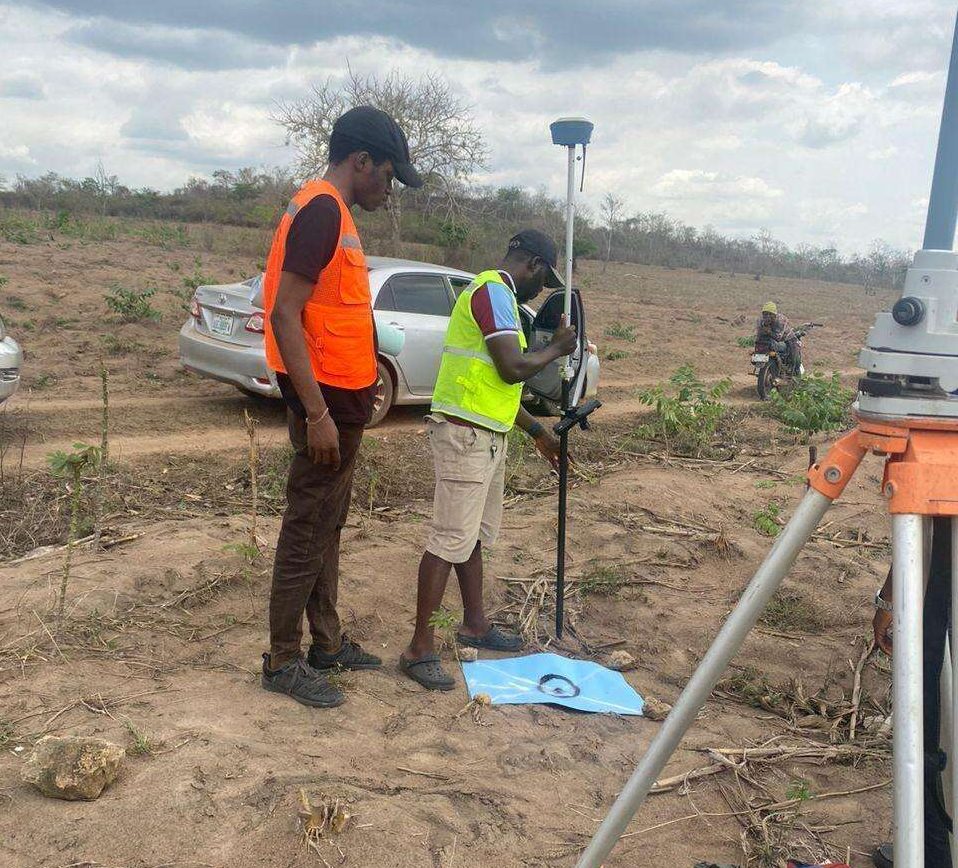
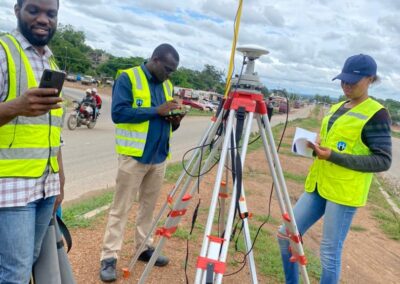
RTK GNSS is the preferred option for most boundary surveys, construction staking, and topographic mapping. RTK provides real-time centimeter-level accuracy, making it suitable for fast-paced urban projects.
Static GNSS surveying is more appropriate when establishing control points in areas with limited cellular coverage, such as parts of Kuje or Abaji. A good GPS device should perform reliably in both RTK and static observation modes to cover diverse project needs.
IMU Tilt Compensation for Efficient Fieldwork
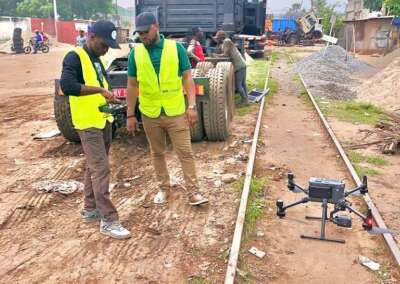
Modern GNSS receivers increasingly feature IMU tilt compensation technology. This allows surveyors to record accurate point measurements even when the pole is tilted, sometimes up to 60 degrees.
In busy parts of Abuja, where obstacles such as fences, drainage structures, parked vehicles, and tight property corners are common, IMU functionality significantly improves efficiency. It reduces setup time and allows measurements in locations that are otherwise difficult to access.
Rugged Design for Abuja’s Climate Conditions
The Federal Capital Territory experiences extreme weather conditions, from high temperatures during the dry season to heavy rainfall during the wet season. Survey equipment must be designed to withstand these conditions.
A professional GPS device should have a minimum IP67 or IP68 rating, ensuring resistance to dust and water ingress. Battery performance is also critical. Devices with hot-swappable batteries or a minimum of 12 to 15 hours of operating time are better suited to long field days and limited power availability.
| Model | Accuracy | Key Feature | Approx. Price (NGN) |
| Hi-Target V200 | 8mm RTK | Ultra-compact & Light | ₦5,000,000+ |
| CHCNAV i73+ | 8mm RTK | IMU Tilt Sensor | ₦2,800,000 – ₦3,500,000 |
| UniStrong G970ii | High Precision | 800 Channels / 20km range | ₦5,800,000+ |
| Leica GS07 | Professional | World-class reliability | ₦13,000,000+ |
Popular GPS Devices Used in Nigeria (2026)
Several GNSS receivers are widely used by surveyors in Abuja due to their performance and availability in the Nigerian market.
The CHCNAV i73+ offers RTK accuracy with IMU tilt compensation at a relatively affordable price, making it a popular choice for independent surveyors. Hi-Target models such as the V200 are valued for their compact design and reliable RTK performance. UniStrong receivers provide strong multi-constellation tracking and extended range, while Leica devices are known for durability and long-term reliability, though at a higher cost.
The right choice depends on project scale, accuracy requirements, and budget.
AGIS Compatibility and Local Technical Support
Before purchasing a GPS device, it is essential to confirm compatibility with AGIS requirements. Survey data should export easily into formats such as CSV or DXF and integrate seamlessly with AutoCAD and ArcGIS workflows.
Local support is equally important. Surveyors should purchase equipment from vendors with service centers in Nigeria, preferably in Abuja or Lagos, to ensure access to calibration, firmware updates, and repairs.
Final Verdict
For most surveyors operating in Abuja, a mid-range RTK GNSS receiver with IMU tilt compensation offers the best balance between accuracy, performance, and cost. Devices in this category meet AGIS requirements while remaining affordable for private and government contracts.
Whether working on residential developments in Maitama or large infrastructure projects within the FCT, choosing the right GPS device is a critical step toward delivering accurate, professional survey results.