



Investing in African Drone Technology: Opportunities, Emerging Markets and the Geoinnovation Summit Case Study
Africa’s technology landscape is evolving, and drone technology is becoming an increasingly important part of that transformation. From agricultural monitoring and infrastructure inspection to security surveillance, mapping and logistics, Unmanned Aerial Vehicles (UAVs) are creating new opportunities for businesses, governments and technology developers.
As demand for efficient data collection, automation and real-time monitoring grows, the African drone industry presents opportunities for investors looking to participate in emerging technology markets.
But investing in drone technology goes beyond purchasing aircraft or funding drone manufacturers. It involves an entire ecosystem of hardware development, software engineering, data processing, geospatial intelligence, maintenance, training and commercial applications.
For investors, entrepreneurs and technology companies, understanding this ecosystem is essential to identifying viable opportunities.
In Nigeria, the growing conversation around indigenous technology development, national security and economic resilience makes the drone industry particularly relevant.
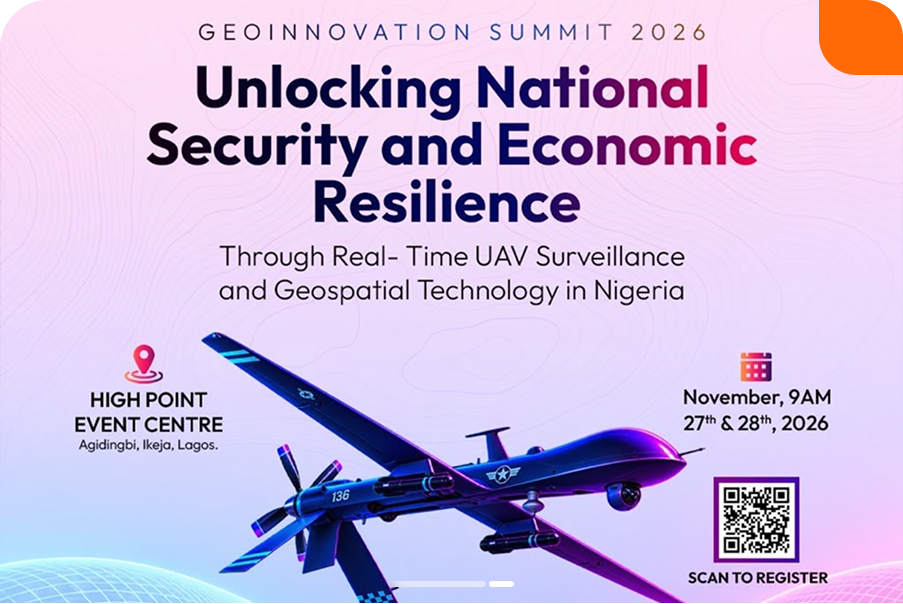
This is where Geoinnovation Summit 3.0, organized by Geoinfotech, becomes an important case study. The summit provides a platform for technology companies, investors, innovators, industry leaders and decision-makers to explore the possibilities of UAV surveillance and geospatial technology.
In this article, we examine the investment opportunities in African drone technology, the sectors driving demand, the challenges investors should understand and how industry platforms such as Geoinnovation Summit can support the development of the ecosystem.
Why Is African Drone Technology Attracting Investment Interest?
Drone technology is no longer limited to photography and recreational activities. Across Africa, UAVs are increasingly being explored for commercial, industrial, agricultural, environmental and security applications.
One reason for this growing interest is the need for better ways to collect information, monitor assets and manage operations across large geographical areas.
For example, agricultural businesses can use drones to assess crop conditions, while construction companies can monitor project progress through aerial surveys. Energy companies can also use UAVs to inspect infrastructure and identify visible changes along pipeline corridors.
The African Development Bank has also demonstrated institutional interest in expanding drone applications. In August 2025, it signed a cooperation agreement with Japanese drone manufacturer Aerosense to explore drone-related projects, including infrastructure maintenance, disaster management, agricultural sensing and medical equipment delivery in Africa. https://www.afdb.org/en/news-and-events/press-releases/ticad9-african-development-bank-and-aerosense-inc-sign-loi-advance-cooperation-and-projects-drone-technology-africa-86280
This illustrates that drone technology is attracting attention beyond individual operators and private businesses. Development institutions, governments and technology manufacturers are also exploring its potential.
For investors, the opportunity lies in identifying the problems that drone technology can solve and the business models capable of delivering sustainable solutions.
7 Investment Opportunities in the African Drone Technology Industry
The drone industry offers several potential investment areas. Investors do not necessarily need to manufacture aircraft to participate in the market.
Here are seven areas worth exploring.
1. Drone Manufacturing and Hardware Development
One of the most visible investment opportunities is the development and manufacturing of drone hardware.
Africa has an opportunity to build more local capacity in UAV design, assembly, component development and manufacturing.
Potential areas include:
- Agricultural spraying drones.
- Surveying and mapping drones.
- Industrial inspection UAVs.
- Surveillance platforms.
- Drone batteries and power systems.
- Sensors, cameras and other drone components.
- Ground control and communication equipment.
Local manufacturing could help create technical jobs, develop engineering expertise and reduce dependence on imported equipment.
Nigeria is already seeing developments in this area. Terra Industries, for example, has attracted significant investment for its autonomous systems and manufacturing ambitions. Its activities demonstrate growing investor interest in indigenous African drone and defense technology development. https://techeconomy.ng/terra-industries-18m-africa-drone-factory
For investors, opportunities may exist in manufacturing partnerships, component production, research and development, and specialized UAV platforms.
2. Agricultural Drone Technology
Agriculture remains an important part of many African economies, creating opportunities for technology that can improve productivity and resource management.
Agricultural drones can support:
- Crop monitoring and assessment.
- Precision spraying.
- Fertilizer application.
- Farm mapping.
- Irrigation monitoring.
- Crop health analysis.
- Agricultural land inspection.
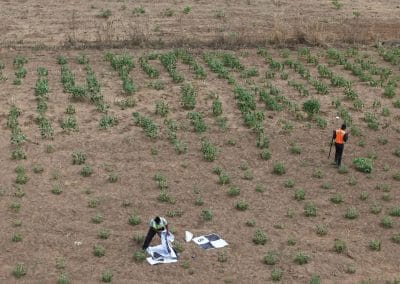
For example, a commercial drone service provider could work with large-scale farmers to conduct regular aerial surveys, identify areas requiring attention and provide geospatial reports.
Another business could specialize in drone spraying services, charging agricultural businesses based on farm size, application requirements or service contracts.
This creates opportunities for investment in UAV equipment, agricultural software, drone service businesses and precision agriculture platforms.
Nigeria’s National Information Technology Development Agency has also promoted demonstration projects involving UAVs, IoT, AI and other emerging technologies in agriculture, with selected projects eligible for funding of up to ₦10 million. https://4irta.nitda.gov.ng/
3. Drone Surveying, Mapping and Geospatial Data Services
The relationship between drone technology and geospatial intelligence creates another significant business opportunity.
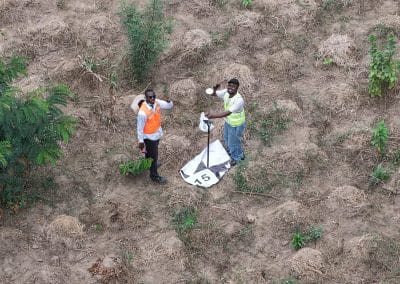
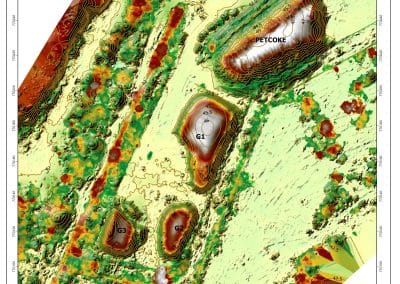
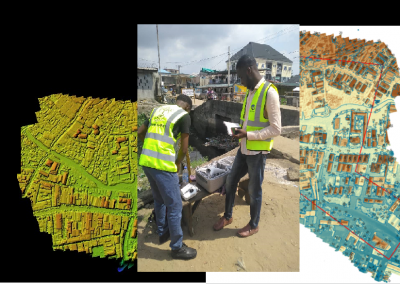
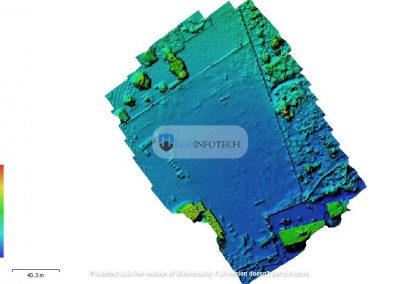
Drones can capture aerial data that can be processed into useful geospatial products.
These include:
- Orthomosaic maps.
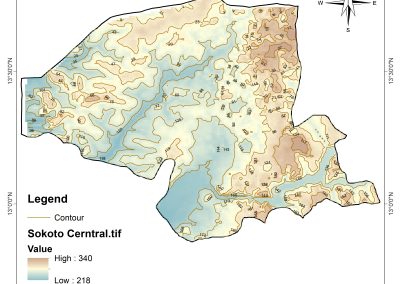
- Digital Elevation Models (DEMs).
- Digital Surface Models (DSMs).
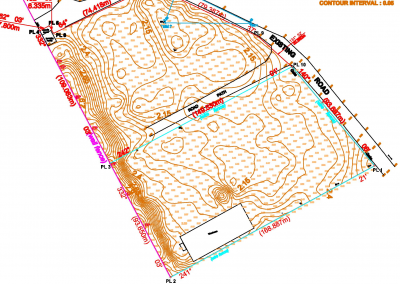
- Contour maps.
- 3D terrain models.
- Volumetric calculations.
- Infrastructure and asset maps.
These outputs are useful in construction, mining, urban planning, land administration, engineering and environmental assessment.
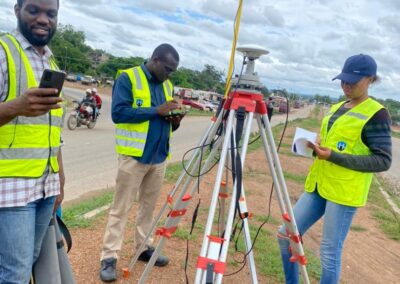
Investors can explore opportunities in drone surveying companies, photogrammetry services, geospatial software, data processing platforms and specialized mapping solutions.
Rather than simply selling drone equipment, businesses can build recurring revenue by offering surveying, monitoring and data analysis services.
4. UAV Surveillance and Security Technology
Security is another important area driving interest in drone technology.
UAV surveillance can support infrastructure monitoring, aerial observation, situational awareness and the assessment of difficult-to-access locations.
Potential applications include:
- Monitoring critical infrastructure.
- Pipeline and facility inspections.
- Border-area observation by authorized agencies.
- Emergency response assessment.
- Public safety monitoring.
- Environmental and resource protection.
For Nigeria, where infrastructure protection and national security are important national priorities, there is an opportunity to develop locally relevant UAV and geospatial intelligence solutions.
Investment opportunities may include surveillance platforms, thermal imaging systems, secure data transmission, command-and-control software, mapping applications and geospatial analytics.
However, security-related UAV investments require careful consideration of regulatory approvals, data protection, operational permissions and the distinction between civilian and defense applications.
5. Drone Software and Artificial Intelligence
A drone is only one part of the technology ecosystem. The software used to control, process and interpret the information it collects is equally important.
This creates opportunities for software developers and technology investors.
Potential products include:
- Drone fleet management systems.
- Flight planning software.
- Automated image processing platforms.
- AI-powered object detection.
- Geospatial dashboards.
- Real-time monitoring applications.
- Automated infrastructure inspection systems.
- Drone data management platforms.
Artificial intelligence can help process large volumes of aerial imagery, identify patterns and automate parts of data analysis.
For example, an AI-powered platform could analyze repeated drone surveys of a construction site to identify changes in project progress.
Another application could analyze aerial imagery to identify visible vegetation changes around infrastructure corridors.
These solutions can create opportunities for software subscriptions, enterprise licensing, data services and technology partnerships.
6. Drone Logistics and Delivery Services
Drone logistics is another emerging area of interest across Africa.
UAVs can potentially support the delivery of medical supplies, emergency materials and other lightweight goods to locations where conventional transportation is difficult or time-consuming.
Potential applications include:
- Medical supply delivery.
- Emergency logistics.
- Remote-area delivery services.
- Industrial spare-parts transportation.
- Specialized cargo operations.
However, commercial drone delivery requires more than purchasing aircraft. It involves suitable infrastructure, route planning, operational approvals, communication systems, payload management and reliable business models.
Investors should therefore assess the specific market demand, regulatory environment and cost of operating a delivery network before committing capital.
7. Drone Training, Maintenance and Technical Support
As the number of commercial drone applications grows, so does the need for skilled personnel and reliable technical support.
This creates opportunities beyond manufacturing and drone operations.
Businesses can invest in:
- Professional drone pilot training.
- UAV maintenance and repair centers.
- Drone equipment distribution.
- Technical consultancy.
- Geospatial data processing training.
- Software and equipment support.
- Drone operations management.
These services are important because a growing drone ecosystem needs more than equipment. It requires qualified operators, engineers, analysts and technicians who can maintain and operate the technology responsibly.