


Drone Regulations in Nigeria and Africa: What You Need to Know and Why
Drones are transforming industries across Africa. From aerial surveying and agriculture to infrastructure inspection, security surveillance and environmental monitoring, Unmanned Aerial Vehicles (UAVs) are creating new opportunities for businesses and governments.
However, operating a drone involves more than purchasing equipment and learning how to fly. Every country has regulations governing drone registration, pilot qualifications, flight permissions and airspace safety.
For drone pilots, UAV service providers and geospatial professionals, understanding these rules is essential. As drone technology becomes increasingly important to national security and economic development, regulatory compliance is becoming an even bigger part of the conversation.
So, what are the drone regulations in Nigeria and other African countries? Why do they matter, and how do they connect with the future of UAV technology?
1. Drone Regulations in Nigeria: What You Should Know
In Nigeria, the Nigeria Civil Aviation Authority (NCAA) regulates civil drone operations under the Nigeria Civil Aviation Regulations (Nig. CARs) 2023, Part 21, which covers Remotely Piloted Aircraft Systems.
The regulations establish requirements for drone registration, operator certification, pilot competency, operational safety and other aspects of UAV operations.
Here are some important things operators should understand:
Drone registration: Operators must comply with applicable aircraft registration requirements before conducting operations. The NCAA provides a digital registration portal at https://rpas.ncaa.gov.ng/.
Operational permits: Different drone activities may require different approvals. Recreational flying, commercial surveying, agricultural spraying and security surveillance should not be assumed to follow identical requirements.
Commercial operations: Organizations providing professional drone services may need an RPAS Operator Certificate (ROC) and other applicable approvals.
Pilot competency: Remote pilots must meet the training, competency and licensing requirements relevant to their operations.
Airspace restrictions: Airports, restricted zones and sensitive facilities may have limitations on drone flights. Operators must check the proposed flight area and obtain any required authorization.
Privacy and insurance: Drone operators must consider applicable insurance requirements, privacy rules and responsible data collection when conducting aerial operations.
Importantly, registering a drone does not automatically authorize every type of flight. Always confirm the requirements for your particular operation with the NCAA.
2. How Do Drone Regulations Differ Across Africa?
Africa does not have one universal drone regulatory system. Each country has its own aviation authority and operating requirements.
Here are examples from selected countries:
- Nigeria: Nigeria Civil Aviation Authority (NCAA) – regulates drone operations under Nig. CARs Part 21.
- Ghana: Ghana Civil Aviation Authority (GCAA) – regulates UAV registration, permits and operational requirements.
- Kenya: Kenya Civil Aviation Authority (KCAA) – oversees Unmanned Aircraft Systems registration and operations.
- South Africa: South African Civil Aviation Authority (SACAA) – regulates drone operations under Part 101 of its Civil Aviation Regulations.
- Tanzania: Tanzania Civil Aviation Authority (TCAA) – oversees drone registration, authorization and operational safety.
Operators planning to work across these countries should check each authority’s current requirements.
A drone registered in Nigeria, for example, should not automatically be assumed to have permission to operate in Ghana or Kenya.
3. What Do You Need Before Flying a Drone?
Whether you are an individual pilot or a commercial UAV operator, proper preparation can prevent unnecessary delays and regulatory problems.
Before flying, consider these important steps:
- Identify the aviation authority: Understand which agency regulates drone operations in your destination country.
- Register your drone: Complete the applicable aircraft and operator registration requirements.
- Obtain necessary approvals: Confirm the permits required for your specific activity.
- Check pilot qualifications: Ensure the remote pilot meets the applicable competency requirements.
- Check airspace restrictions: Identify restricted areas, airports and sensitive facilities.
- Prepare safety documentation: Confirm insurance, flight plans and risk assessments where required.
These steps are particularly important for commercial activities such as drone surveying, infrastructure inspection, agricultural spraying and aerial surveillance.
4. Why Are Drone Regulations Important?
Drone regulations are not simply administrative requirements. They support the responsible growth of the UAV industry.
Aviation safety: Regulations help prevent interference with commercial aircraft and other aviation users.
Protection of people and property: Operational requirements help reduce risks associated with accidents, equipment failure and careless flying.
Privacy and data protection: Rules help establish responsible practices for aerial photography, surveillance and information collection.
Industry credibility: Businesses that prioritize compliance can build stronger relationships with clients, regulators and project partners.
Responsible innovation: Clear regulatory frameworks help create an environment where new drone applications can develop without compromising public safety.
As UAV technology advances, these considerations become even more important.
5. Drone Regulations, National Security and the Future of Geospatial Technology
One of the growing applications of drone technology in Africa is national security.
UAVs can support border monitoring, critical infrastructure inspection, emergency response and real-time situational awareness. When combined with GIS, satellite imagery and remote sensing, they can provide valuable information for decision-makers.
However, these applications also introduce important questions.
How should drones operate around sensitive infrastructure? Who should authorize security-related flights? How should aerial intelligence be collected, protected and managed?
These challenges show why the future of the drone industry requires more than advanced aircraft. It also requires collaboration between regulators, government agencies, technology companies and geospatial professionals.
This is precisely why conversations about UAV technology, regulation and national security are important to the wider geospatial industry.
6. Why This Conversation Matters at GeoInnovation Summit 3.0
The future of drone technology in Nigeria and Africa will depend on how effectively we combine innovation, regulation and responsible deployment.
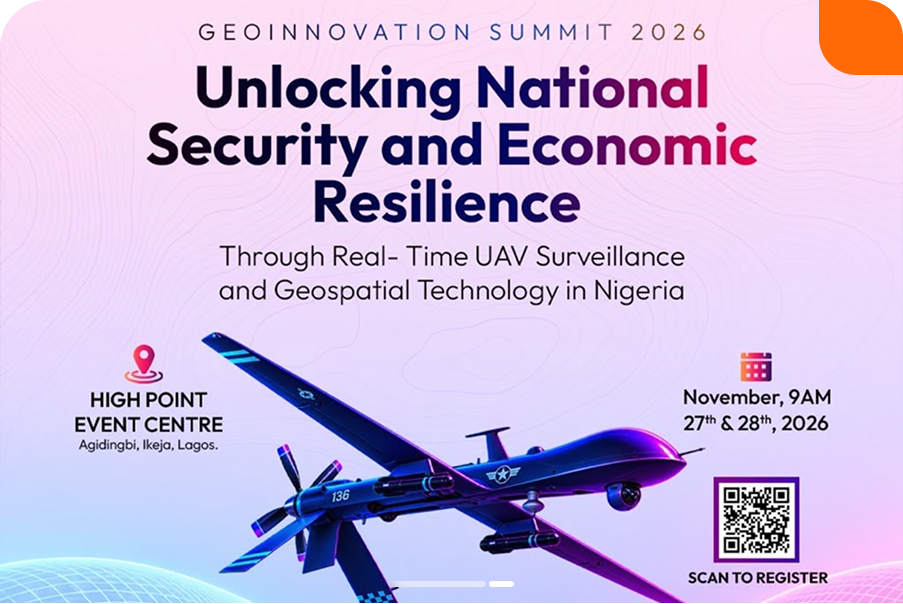
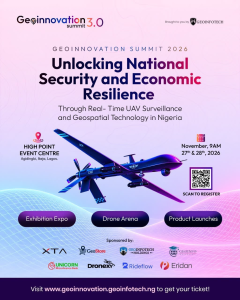
This is one of the important conversations surrounding Geoinnovation Summit 3.0, taking place on November 27th–28th, 2026, at High Point Event Centre, Agidingbi, Ikeja, Lagos.
Organised by Geoinfotech, the summit is themed:
“Unlocking National Security and Economic Resilience Through Real-Time UAV Surveillance and Geospatial Technology in Nigeria.”
The theme connects directly with the opportunities and challenges facing the African drone industry.
As UAV applications expand into surveillance, infrastructure protection, agriculture and emergency response, professionals must understand not only what the technology can achieve but also how it can be deployed safely and responsibly.
The summit will bring together industry leaders, technology experts, innovators, researchers and decision-makers for discussions, technical sessions, masterclasses, product showcases, exhibitions, live drone displays and networking opportunities.
For drone pilots, UAV service providers, GIS professionals, policymakers and technology businesses, it offers an opportunity to engage with the developments shaping the future of the industry.
Because building a stronger drone industry requires more than better technology. It requires the right knowledge, policies, partnerships and responsible practices.
Discover Geoinnovation Summit 3.0 and check the latest registration information:
https://geoinnovation.geoinfotech.ng/
Conclusion
Drone regulations are essential to the safe and sustainable growth of UAV technology in Nigeria and across Africa.
From registration and operational permits to pilot competency, airspace restrictions and data protection, every operator must understand the rules that apply to their activities.
As the industry evolves, collaboration between regulators, technology companies and geospatial professionals will become increasingly important.
This is why the conversation at Geoinnovation Summit 3.0 matters. By bringing together stakeholders interested in real-time UAV surveillance and geospatial technology, the summit provides an opportunity to explore how innovation can support national security and economic resilience.
The future of Africa’s drone industry will not be determined by technology alone, but by how responsibly we regulate, develop and deploy it.
Join the conversation in Lagos on November 27th–28th, 2026.