

Abuja, Nigeria’s capital, is currently undergoing a massive geospatial transformation. With the Federal Government launching “Digital Twin” initiatives to map the city in 3D, the demand for high-precision surveying has never been higher.
In this case study, we pull back the curtain on a recent Geoinfotech project in the Federal Capital Territory (FCT). We demonstrate how the strategic integration of UAV (Drone) mapping and GNSS/GPS technology solved complex terrain challenges while meeting strict 2026 regulatory standards.
1. Project Overview: The Abuja Urban Expansion
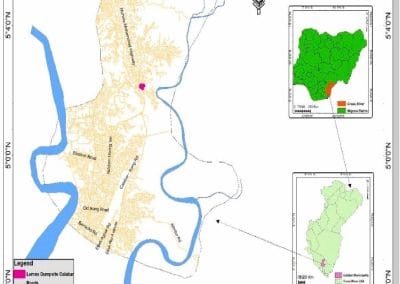
Location: Peripheral development zone, Abuja Municipal Area Council (AMAC).
Area Size: 150 Hectares of mixed-use terrain (undulating hills and dense vegetation).
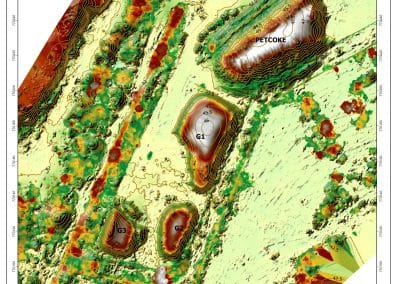
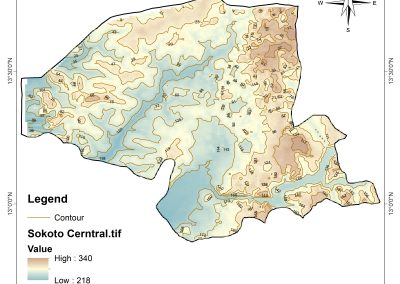
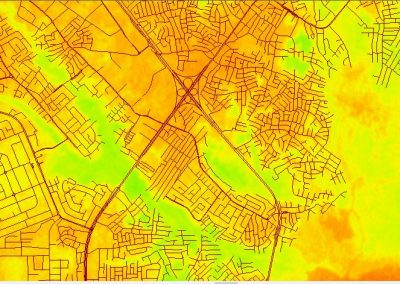
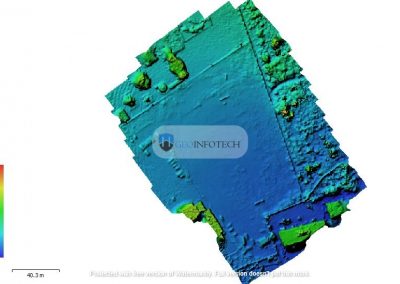
Objective: To produce a high-resolution topographic map, 3D digital surface model (DSM), and georeferenced orthomosaic for a new residential estate.
The Challenge
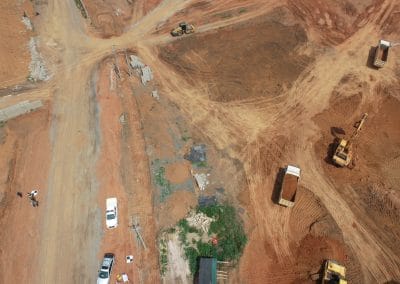
The site featured significant elevation changes and thick “bush” areas that would have taken a traditional ground crew weeks to survey. Additionally, proximity to restricted FCT airspace meant that security compliance was the absolute priority.
2. The Tech Stack: Why “Drone + GPS” is the Winning Combo
In 2026, professionals no longer rely on a single tool. We utilized a hybrid workflow:
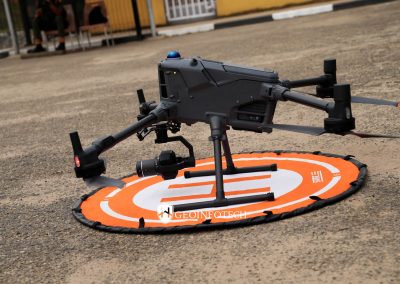
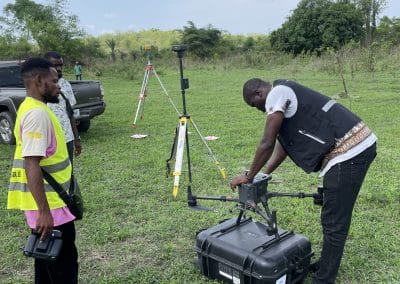
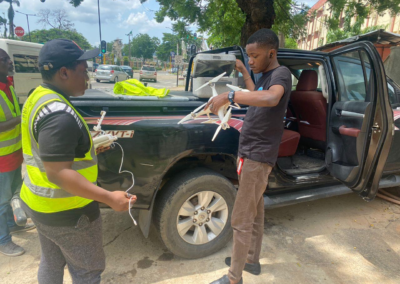
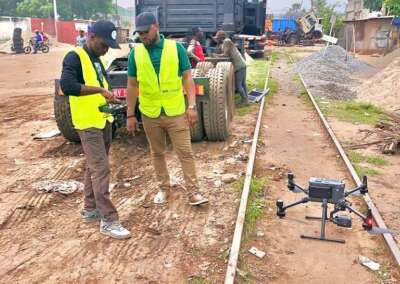
Aerial Tool: DJI Phantom 4 RTK – Chosen for its integrated RTK module which provides real-time metadata corrections.
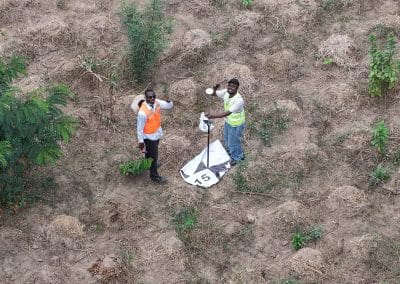
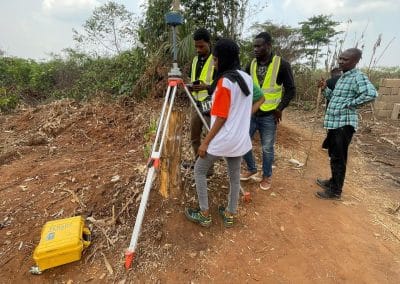
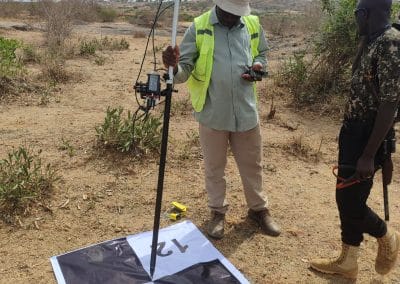
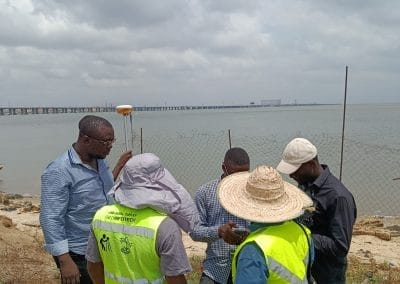
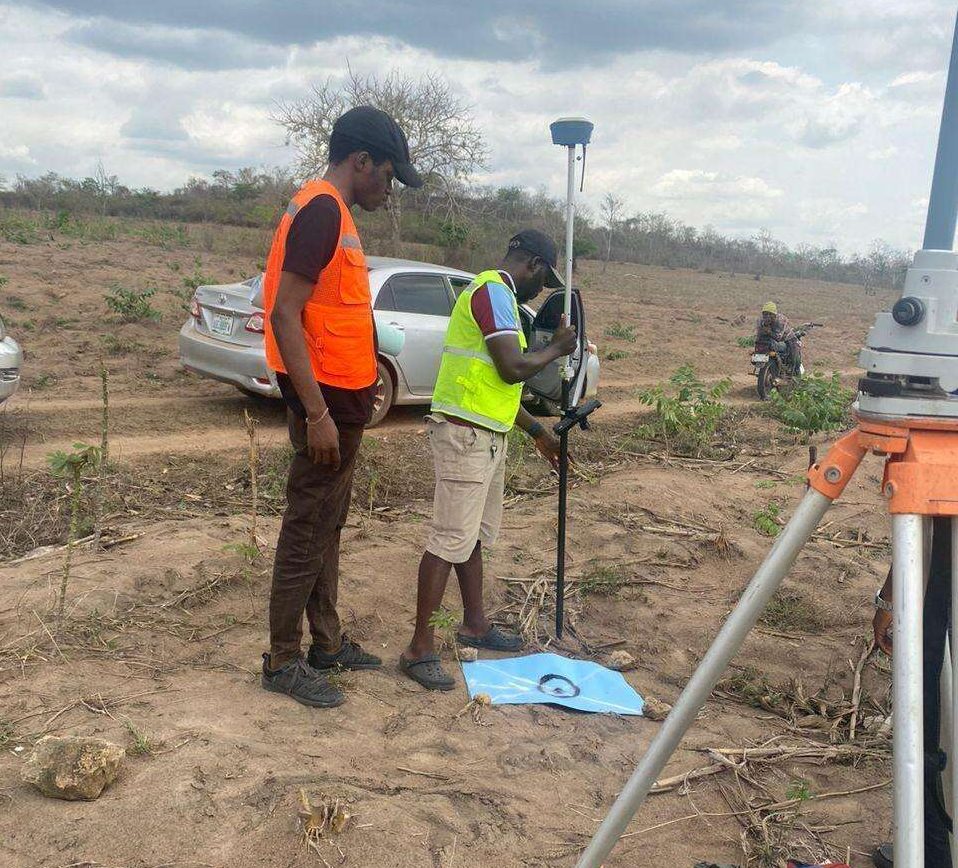
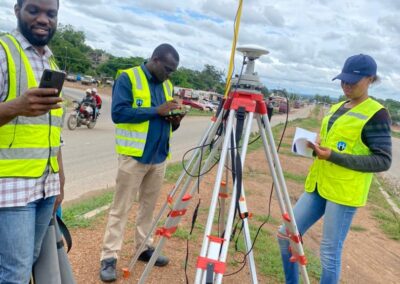
Ground Tool: Tersus Oscar GNSS Receiver – Used for establishing high-accuracy Ground Control Points (GCPs) to anchor the drone data to the earth’s actual coordinates.
Processing Software: Pix4Dmapper and ArcGIS Pro for data stitching and vectorization.
3. The Execution Phase: Step-by-Step
Step 1: Regulatory Clearance (ONSA & NCAA)
Operating in Abuja requires more than just technical skill—it requires legal permission. Geoinfotech secured:
DNP4 Verification: Ensuring the site was safely outside the restricted zone surrounding the Presidential Villa and Aso Rock.
Step 2: Establishing Ground Control Points (GCPs)
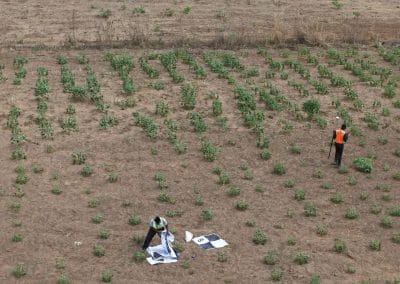
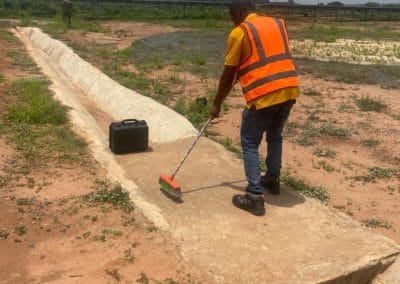
To ensure the map was legally accurate for C of O applications, we established 10 GCPs using the Tersus GNSS in Static Mode. This provided a sub-centimeter coordinate foundation, ensuring the drone data didn’t “drift.”
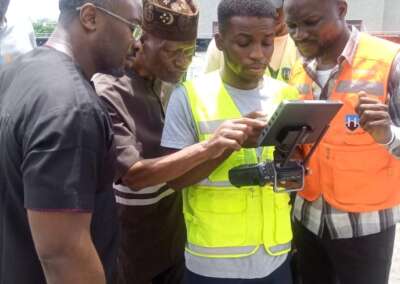
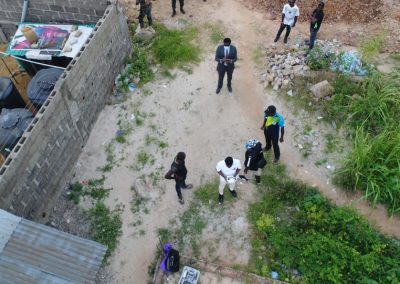
Step 3: Aerial Data Acquisition
The flight was conducted at an altitude of 100 meters, capturing over 1,200 high-resolution images with a 75% front and side overlap. This achieved a Ground Sample Distance (GSD) of 2.7 cm/pixel.
4. Results and Deliverables
What would have taken 15 days with a Total Station was completed in just 3 days (1 day field, 2 days office).
| Deliverable | Use Case | Accuracy Achieved |
| Orthomosaic Map | Planning & Boundary Delineation | ±3 cm Horizontal |
| Digital Elevation Model (DEM) | Drainage & Road Design | ±5 cm Vertical |
| 3D Mesh Model | Virtual Site Inspection/Marketing | N/A (Visual) |
5. Lessons Learned for 2026 Projects
Weather Management: We scheduled flights for 7:00 AM to avoid the hazy Harmattan dust and the mid-day Abuja heat, which can degrade sensor performance.
The “Legal Truth”: Drones provide the speed, but GPS tools provide the accuracy required by the Office of the Surveyor General of the Federation (OSGOF).