

The Rise of Digital Twins in Infrastructure Development
The way global infrastructure is planned, built, and managed is undergoing a massive shift. At the absolute center of this transformation is digital twin technology. Therefore, for geospatial professionals, civil engineers, and urban planners, understanding this technology is no longer optional. It is the blueprint for modern development.
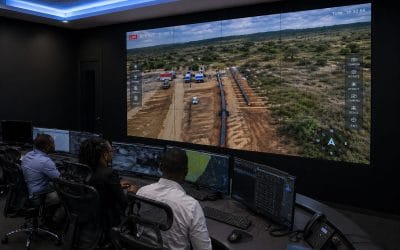
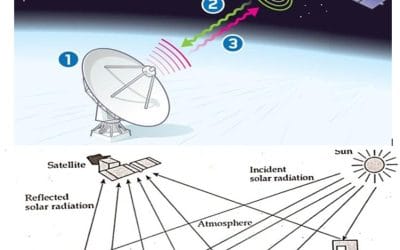
A digital twin is a dynamic, virtual replica of a physical asset or environment. Unlike a static 3D model or a traditional CAD drawing, a digital twin is a living system. It is continuously updated with real-time data from IoT sensors, satellite feeds, high-density LiDAR scanning, and drone mapping services. Consequently, it can simulate, monitor, and predict the behavior of its physical counterpart.
What Is a Digital Twin in Infrastructure
In infrastructure development, a digital twin bridges the gap between engineering data and GIS technology. It creates an intelligent, real-time model of physical assets. These include roads, bridges, pipelines, buildings, power grids, and entire urban ecosystems.
Every functional digital twin relies on three core components:
The Physical Asset: The actual bridge, road, or utility network.
The Virtual Model: The highly accurate 3D spatial replica built from 3D point clouds.
The Data Pipeline: The continuous stream of real-time data connecting the two.
Originally engineered by NASA for spacecraft simulation, digital twin technology has expanded rapidly. Today, it drives innovation in construction, smart city planning, transportation, and water management. Furthermore, it enables critical asset protection through seamless BIM and GIS integration.
Key Applications of Digital Twins in Infrastructure Development
Modern digital twin technology is driving efficiency across every sector of civil infrastructure. Additionally, it is transforming how organizations approach predictive asset maintenance.
Smart City Planning: Simulating urban density, traffic congestion, energy distribution, and land development before breaking ground. This allows planners to make smarter decisions earlier.
Predictive Asset Maintenance: Continuously monitoring structural health indicators on bridges, pipelines, and grids. As a result, teams can mitigate structural failures before they happen.
Climate and Disaster Resilience: Modeling flood risk zones, urban heat islands, and wildfire paths using live environmental data. Therefore, cities can be designed to be safer and more resilient.
Intelligent Transportation Networks: Optimizing mass transit, rail systems, and highways using real-time traffic replicas. Consequently, commuters and logistics operators benefit from fewer delays.
Subsurface Water and Utility Mapping: Utilizing 3D underground models to reduce excavation risks. Furthermore, these models help organizations manage aging pipeline networks more effectively.
The African Landscape: What Digital Twins Mean for Nigeria
Nigeria’s most pressing infrastructure challenges are precisely the problems digital twins are designed to solve. These include unprecedented urban expansion in Lagos, complex transportation corridors in Abuja, and aging utility networks in Port Harcourt.
Implementing geospatial digital twin programs allows government agencies and private developers to optimize both CapEx and OpEx. Moreover, turning urban centers into true smart cities requires a strong digital foundation. Organizations across the African continent that invest today in high-quality spatial data will naturally lead the next generation of smart engineering. Additionally, those who prioritize precision LiDAR surveys and robust GIS consulting Nigeria frameworks will gain a clear competitive advantage.
How Geoinfotech Powers the Digital Twin Revolution
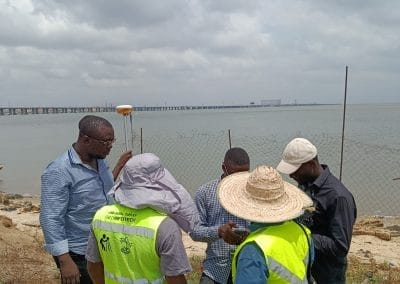
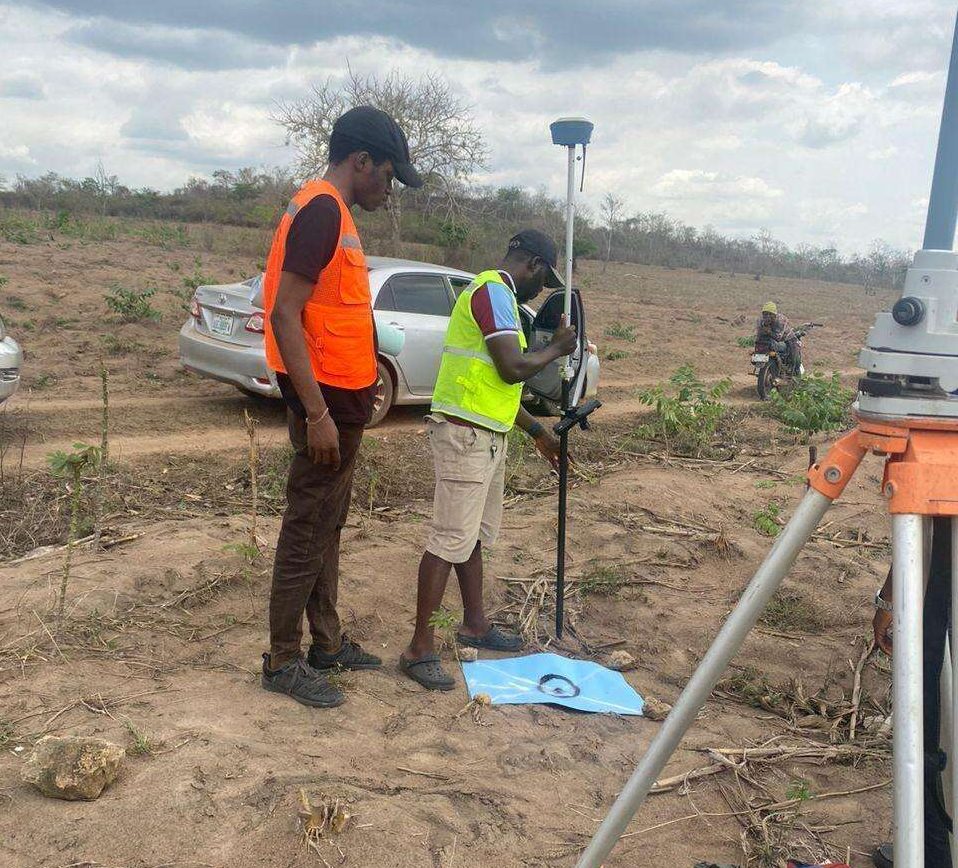
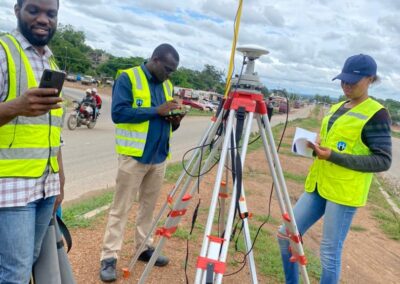
A digital twin is only as reliable as the data that feeds it. As the leading provider of geospatial services in Lagos and across Nigeria, Geoinfotech provides the survey-grade foundational data required to build enterprise-level digital twin ecosystems.
Our specialized capabilities include:
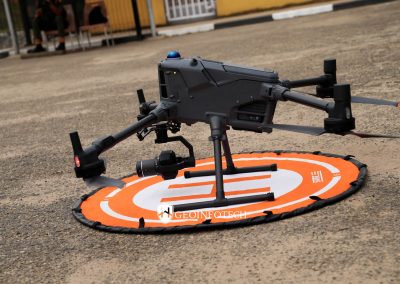
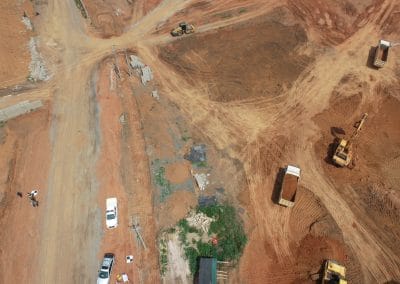
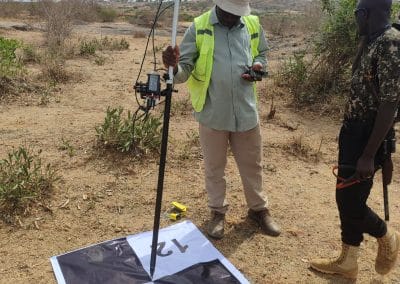
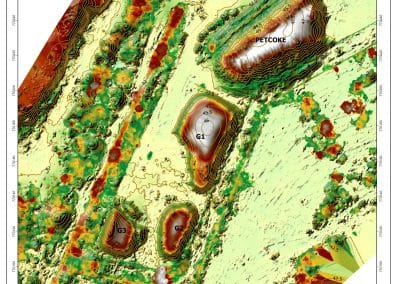
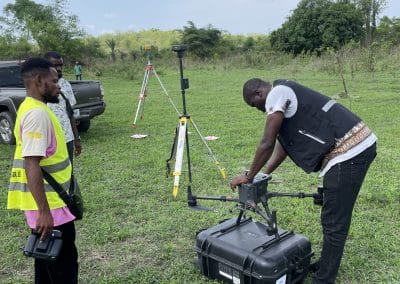
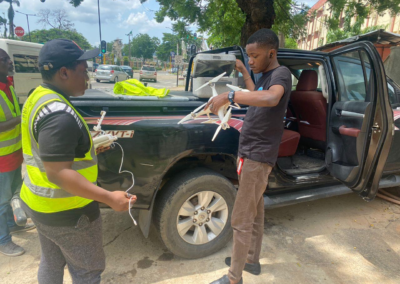
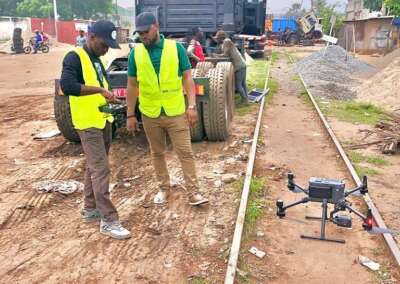
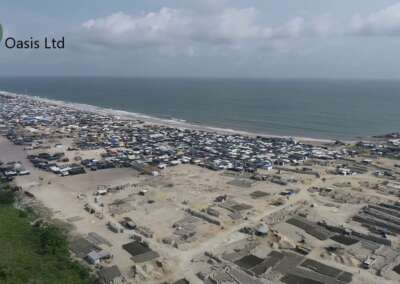
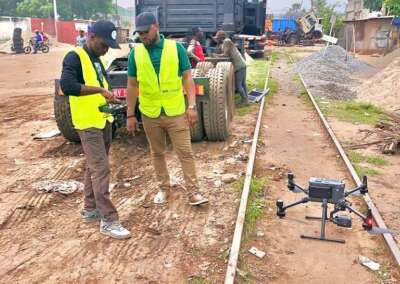
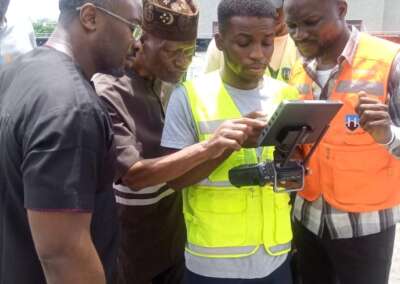
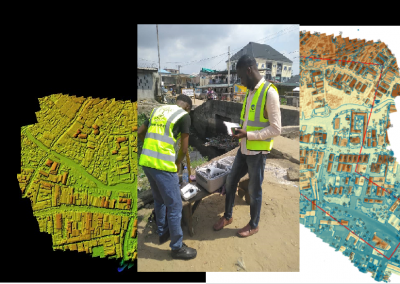
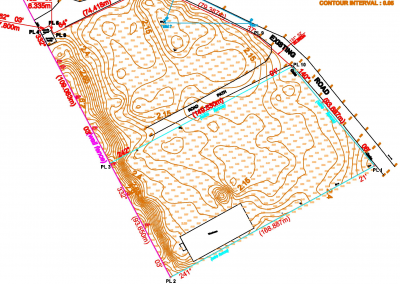
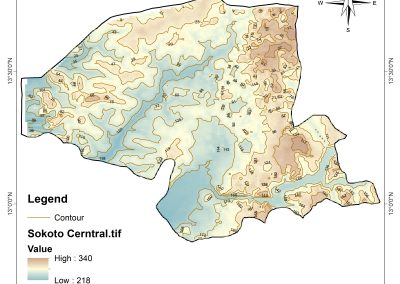
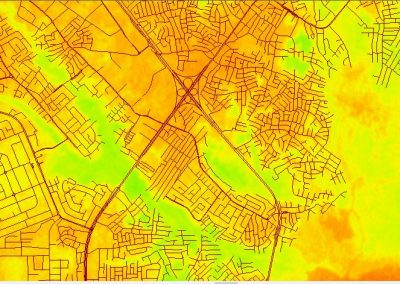
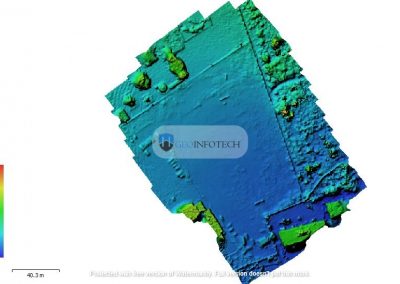
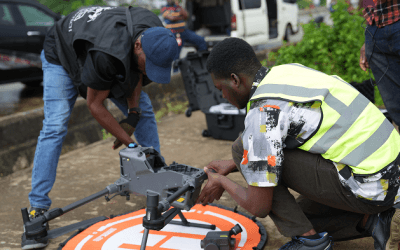
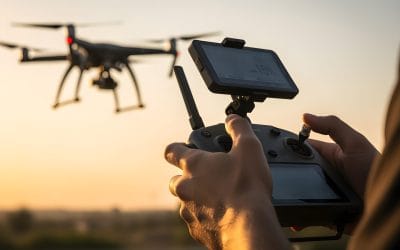
Advanced Drone Mapping Services: Delivering high-resolution orthophotomosaics, Digital Elevation Models (DEMs), and dense 3D point clouds. These form the spatial backbone of any reliable digital twin.
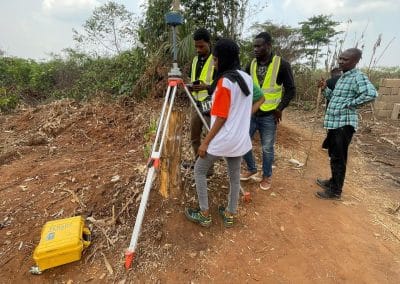
Precision LiDAR Scanning: Capturing exact spatial geometry with millimeter-level accuracy. This level of detail is demanded by modern digital twin architectures.
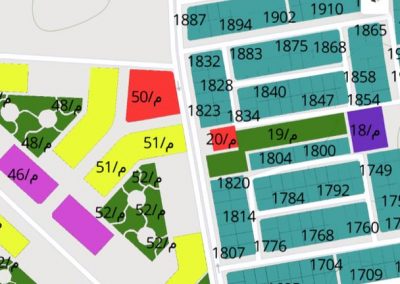
Enterprise GIS Consulting: Structuring, georeferencing, and managing complex spatial datasets. Furthermore, we ensure seamless interoperability with BIM environments and IoT platforms.
Whether you are managing large-scale municipal infrastructure or steering a major construction project, Geoinfotech provides the accurate spatial foundation your digital twin needs. As a result, your asset lifecycle is supported by data you can trust at every stage.
Contact Geoinfotech today to consult with our geospatial experts. Together, we will engineer a data-driven digital twin solution tailored specifically to your asset lifecycle.