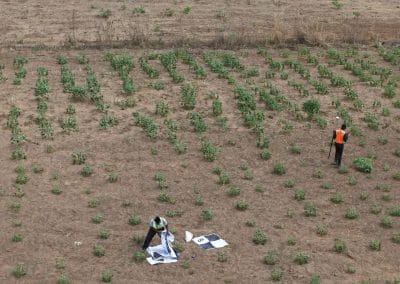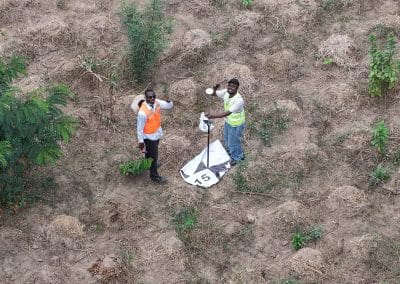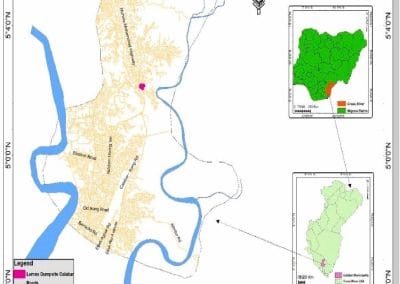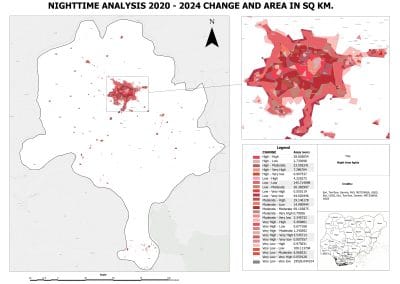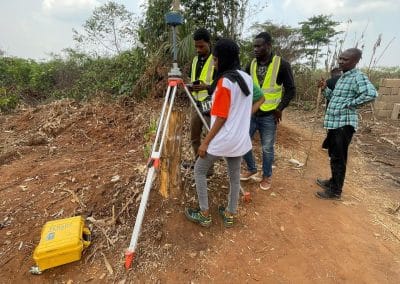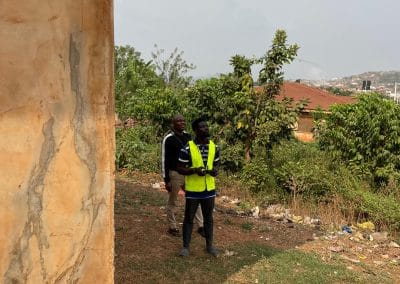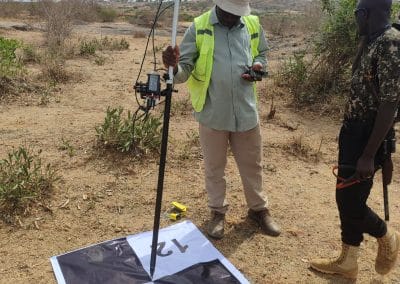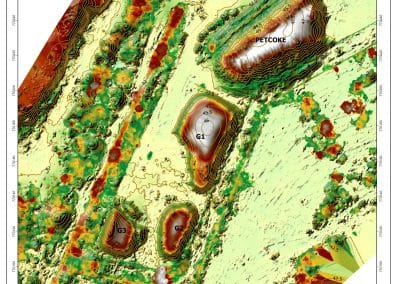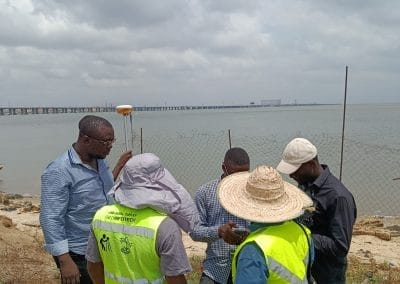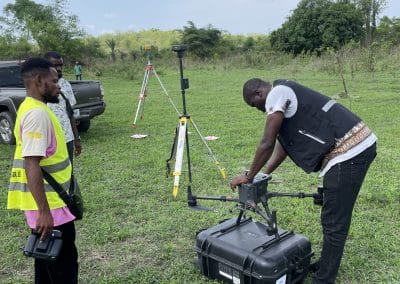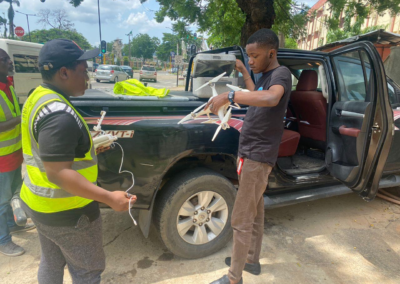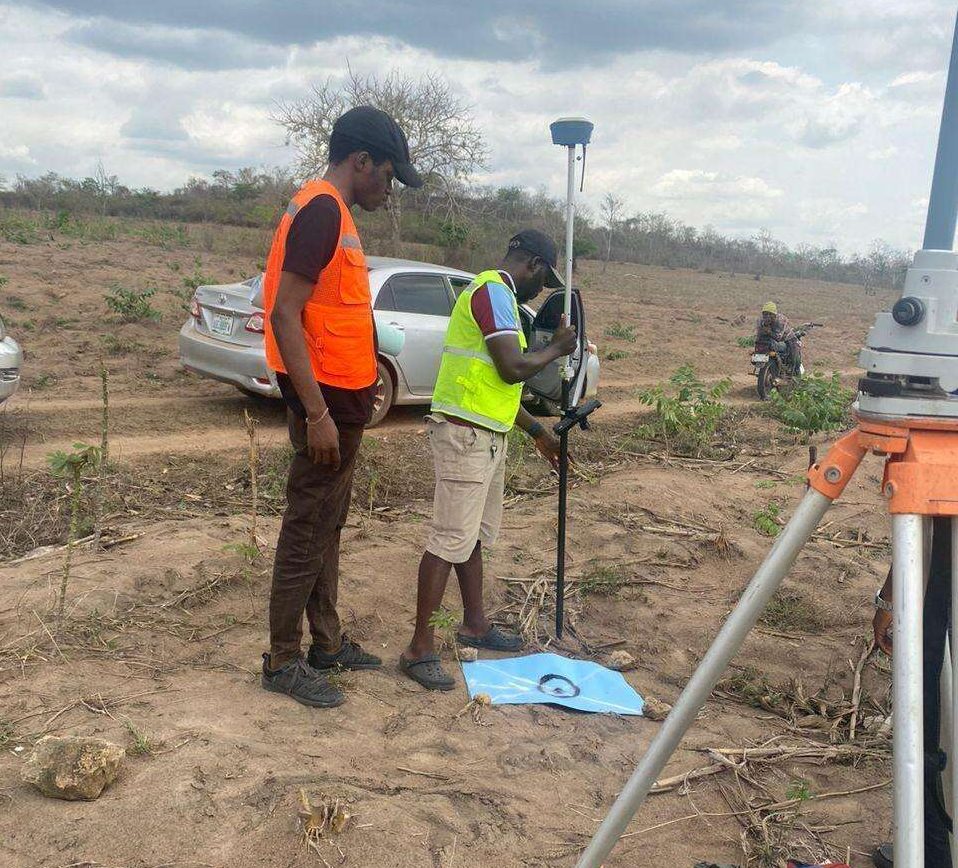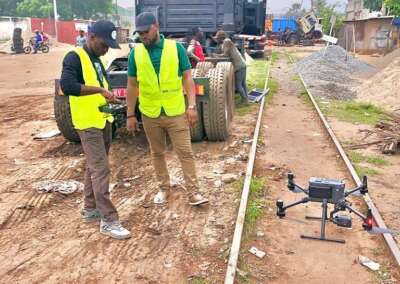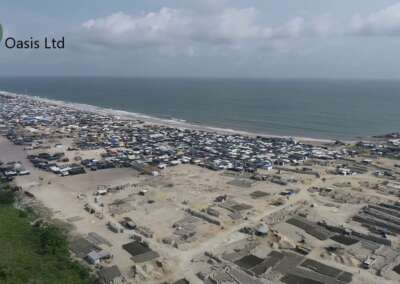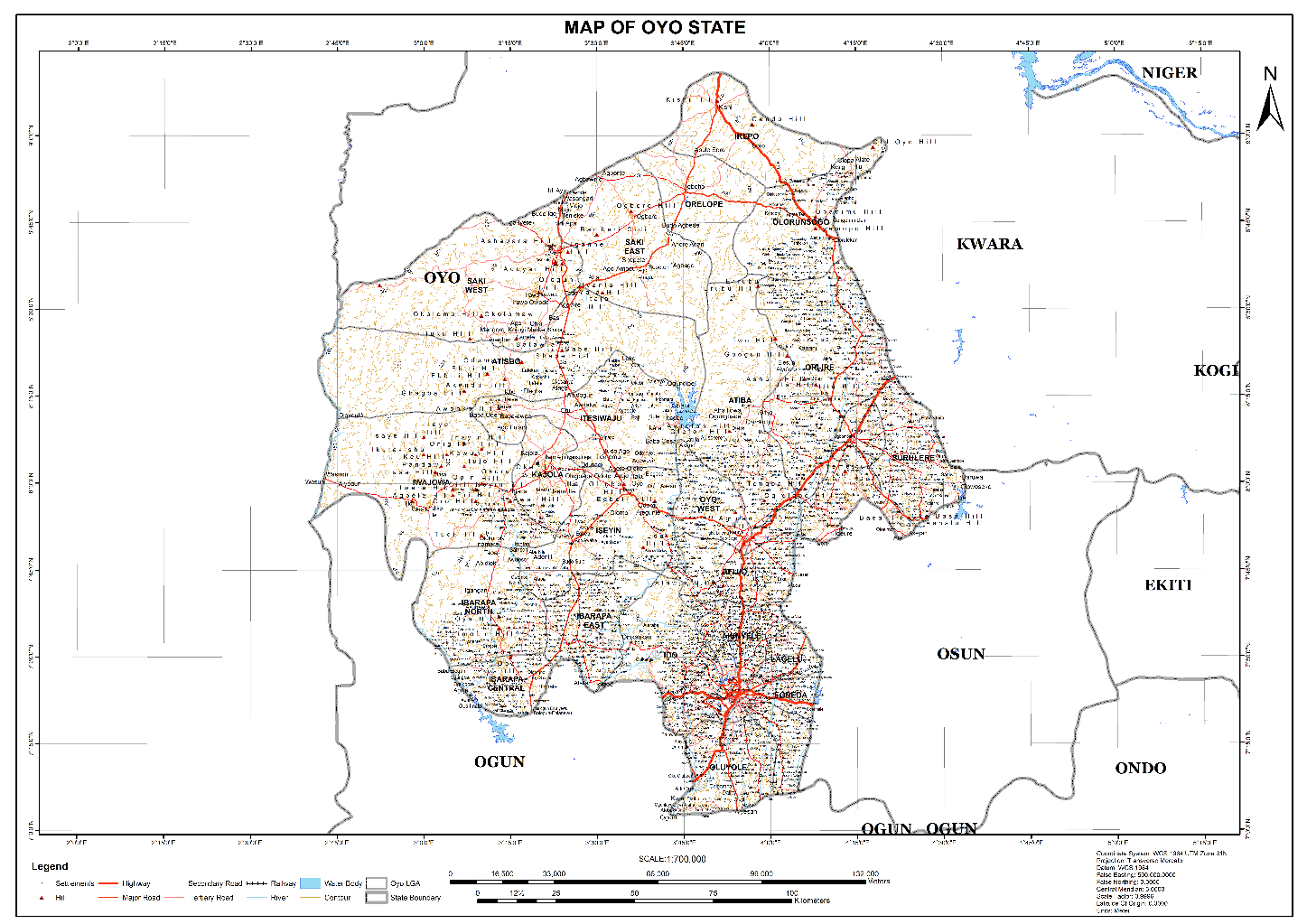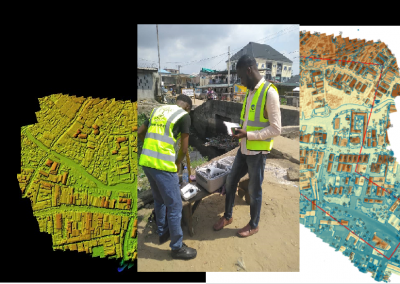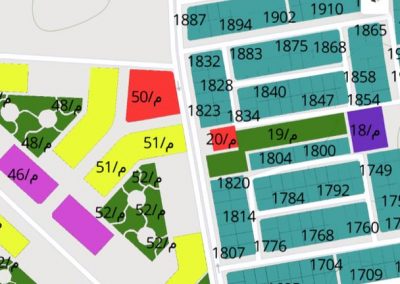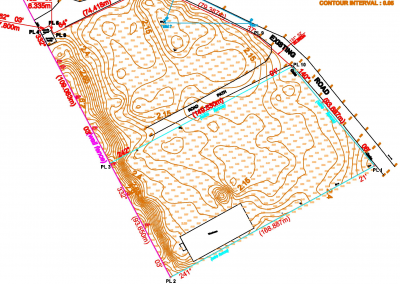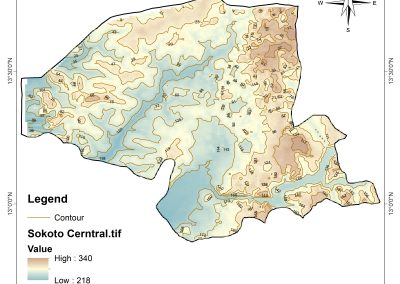

Accuracy is a core requirement in surveying and geospatial data production. Boundary definition, infrastructure planning, and mapping workflows depend on reliable coordinate positioning. Differential GPS, commonly referred to as DGPS, is designed to improve standard GPS accuracy and provide dependable positioning for professional surveying tasks. Differential GPS (DGPS) in surveying is commonly used where meter-level GPS accuracy is not sufficient for professional mapping and land measurement tasks.
Surveyors and GIS professionals widely use DGPS for land surveying, marine navigation, and large-area mapping projects. particularly in regions where consistent geospatial accuracy is critical, such as Nigeria.

What Is Differential GPS (DGPS) in Surveying?
Differential GPS is an enhanced positioning technique that corrects errors present in standard GPS measurements. A typical standalone GPS receiver may produce positional errors of several meters due to satellite clock drift, atmospheric delays, and signal geometry. DGPS reduces these errors by applying real-time or post-processed corrections from a known reference station.
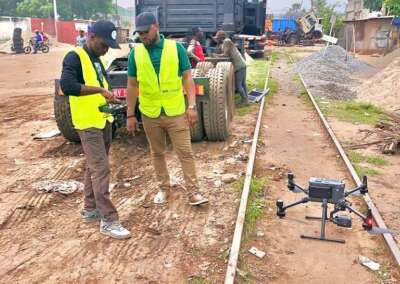
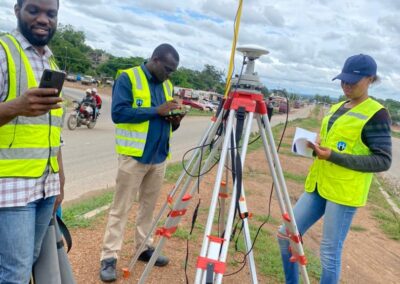
Survey teams install the reference station at a precisely surveyed location. Because its true coordinates are already known, it can compute the difference between the GPS-derived position and the actual position. These differences are transmitted as correction data to nearby rover receivers, improving their positional accuracy.
How DGPS Works in Practice
The DGPS workflow follows a structured correction process:
A base station is set up at a location with known coordinates.
The base station receives GPS signals from satellites.
It calculates positional errors by comparing measured coordinates with known values.
Correction data is broadcast to rover receivers.
Rover receivers apply the corrections to produce improved coordinates.
This correction process compensates for atmospheric effects, satellite orbit errors, and timing inaccuracies. The result is typically sub-meter accuracy, suitable for most professional surveying and mapping applications.
Why DGPS Matters in Surveying and Mapping
DGPS fills the gap between standard GPS and high-precision RTK systems. It offers a practical balance between accuracy, cost, and operational complexity.
Key advantages include:
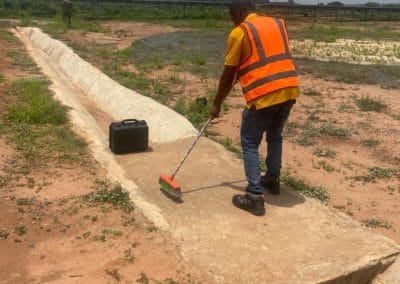
Consistent positional accuracy for boundary mapping, utilities, and control points
Stable performance in areas with partial satellite visibility
Reliable results over large project areas
Reduced need for repeated surveys due to positional drift
In environments with vegetation cover, coastal conditions, or mixed urban terrain, DGPS provides more stable positioning than standalone GPS receivers.
Applications of DGPS in Surveying
DGPS is used across multiple surveying and geospatial disciplines:
- Cadastral and Boundary Surveys: DGPS supports accurate parcel boundary definition, aiding land registration and legal documentation.
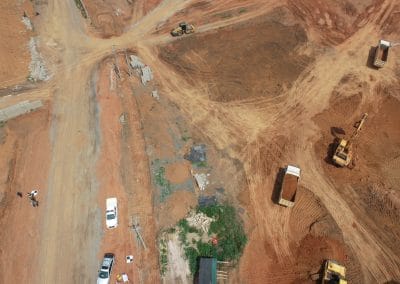
- Engineering and Construction Surveys: It is commonly used during reconnaissance, route alignment, and preliminary design stages before higher-precision methods are deployed.
- Topographic Mapping: DGPS enables the collection of elevation and terrain data required for engineering design, flood modeling, and environmental studies.
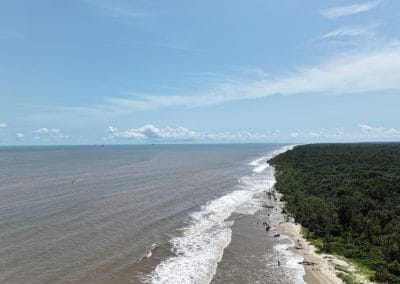
- Marine and Coastal Surveying: Navigation systems, dredging operations, and hydrographic surveys rely on DGPS for safe and precise positioning.
- Agricultural and GIS Mapping: DGPS is used for farm mapping, soil sampling, and spatial data collection requiring repeatable accuracy.
Benefits of DGPS for Surveyors and GIS Professionals
DGPS remains relevant due to its operational advantages:
Sub-meter accuracy without RTK complexity
Lower equipment and operational costs
Easier training and deployment
Reliable performance across large survey extents
Suitable for diverse Nigerian terrain conditions
Improved data quality and reduced post-processing corrections
Conclusion
Differential GPS remains a critical positioning technology for surveyors and GIS professionals who require accuracy beyond standard GPS but do not need centimeter-level precision. Its reliability, cost efficiency, and adaptability make it well suited for cadastral surveys, engineering projects, marine operations, and large-scale mapping. As demand for accurate geospatial data continues to grow, DGPS will remain an essential tool supporting surveying and GIS workflows across Nigeria and similar environments.