
Top Remote Sensing Training Centres in Lagos, Abuja, and Port Harcourt
How to Find the Right Remote Sensing Academy in Nigeria
Choosing a remote sensing training centre in Nigeria is not as straightforward as it should be. The demand for geospatial professionals is growing rapidly, training options are multiplying, and the quality gap between institutions is significant. Some centres promise hands-on training and deliver slide decks. Some claim industry relevance and offer outdated curricula. And some charge professional fees for beginner-level content.
So how do you choose?
The most reliable signals are consistent customer feedback, evidence of practical training, and clear career outcomes from graduates. Apply those filters to the Nigerian market and one institution rises to the top of every conversation.
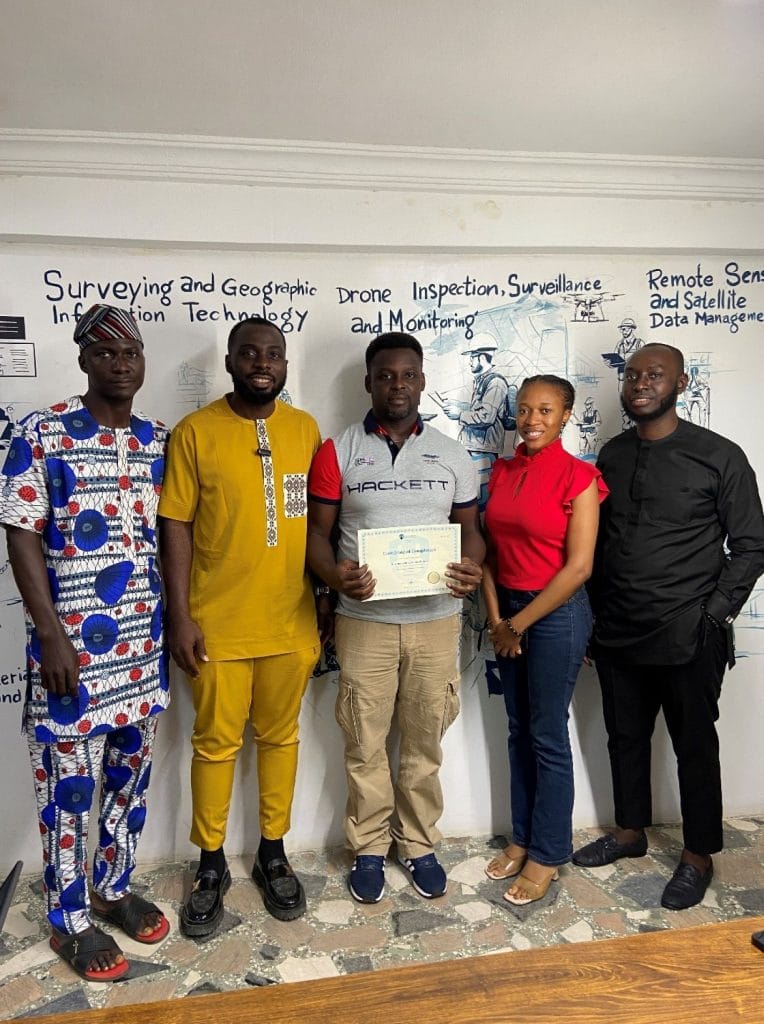
GeoInfo Academy — Geoinfotech’s Training Division
Lagos · Abuja · Port Harcourt
GeoInfo Academy is the training arm of Geoinfotech Resources Limited, one of Nigeria’s leading geospatial services companies. That origin matters. Unlike standalone training academies, GeoInfo Academy’s curriculum is built directly from the tools, workflows, and real-world challenges that Geoinfotech encounters on live client projects — in oil and gas, infrastructure, environmental monitoring, and urban development.
The result is training that is not theoretical by design. It is practical because it cannot be anything else.
What the Training Covers
GeoInfoAcademy offers structured, professional-grade training across the full geospatial skill stack:
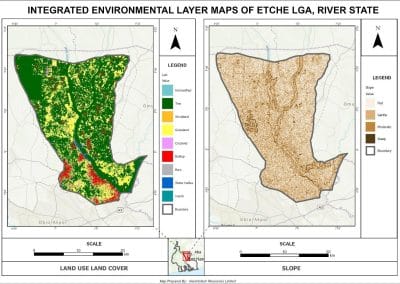
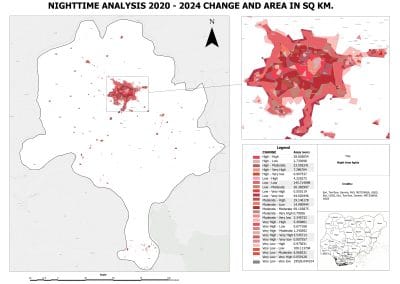
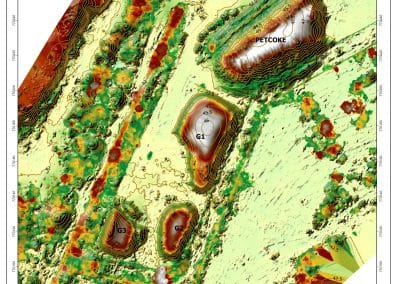
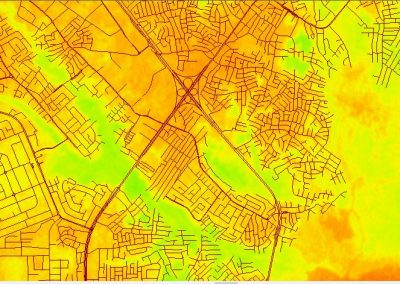
Remote Sensing and Satellite Image Analysis — from the fundamentals of electromagnetic spectrum behaviour to advanced supervised and unsupervised image classification, spectral band analysis, and land use and land cover mapping using real Nigerian datasets.
ArcGIS Desktop and ArcGIS Pro — the industry standard platform, taught at a professional depth. Spatial analysis, geodatabase management, image analysis, cartographic output, and workflow automation.
Google Earth Engine — cloud-based geospatial analysis using one of the most powerful platforms available. Students learn to write JavaScript API queries, process multi-date satellite imagery, and build interactive analysis applications.
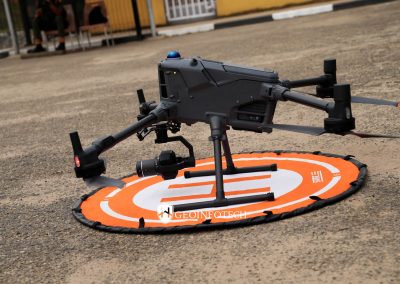
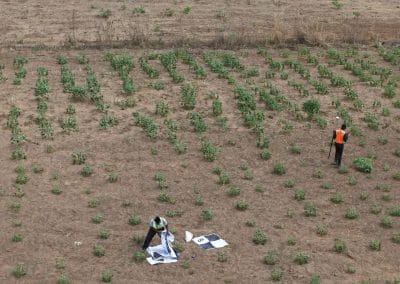
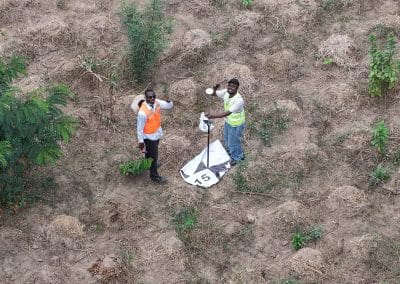
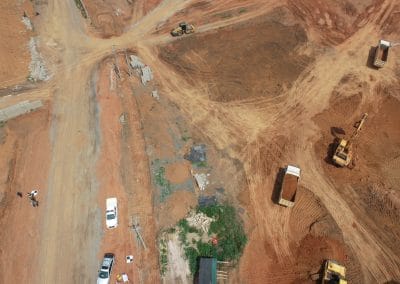
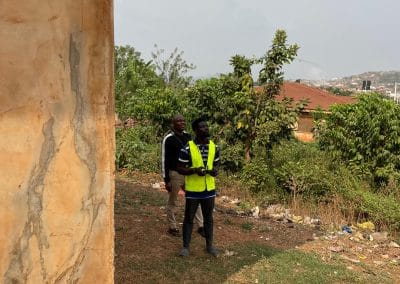
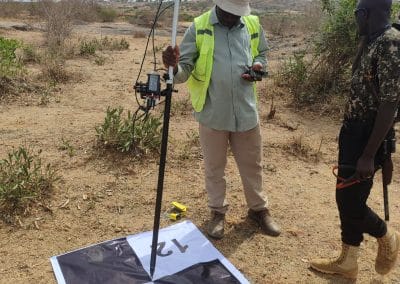
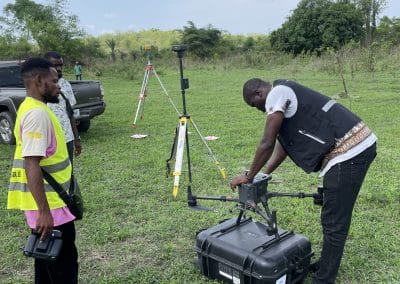
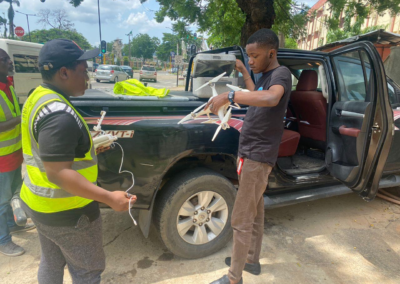
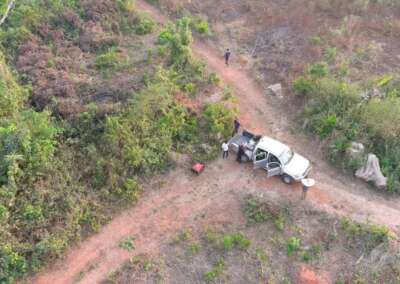
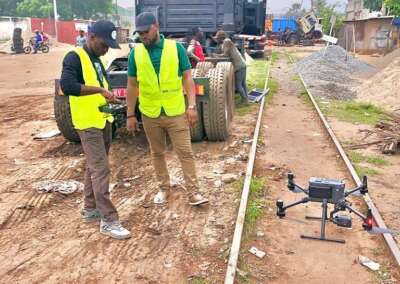
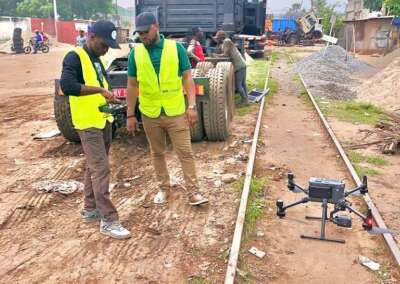
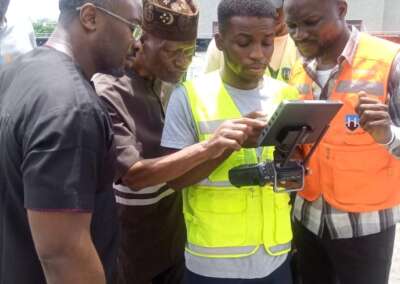
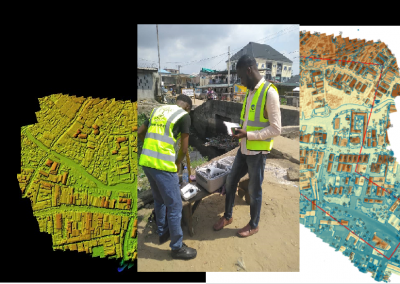
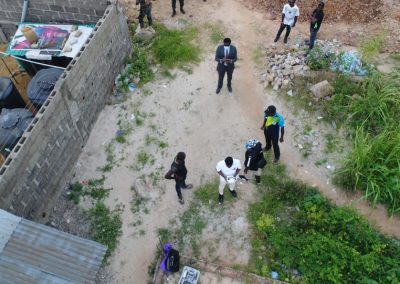
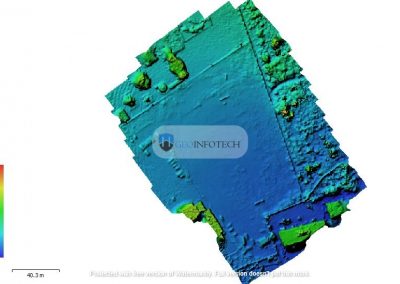
Drone Operations and Photogrammetry — hands-on drone flight training including NCAA regulatory compliance, ground control point placement, and the full pipeline from raw flight data to processed orthomosaic map and DEM deliverable.
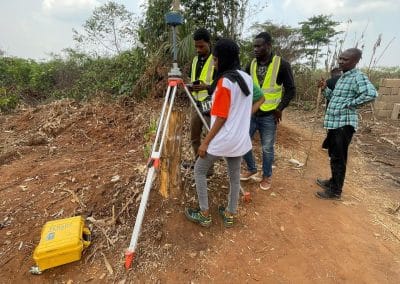
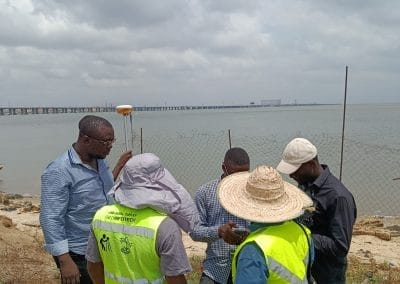
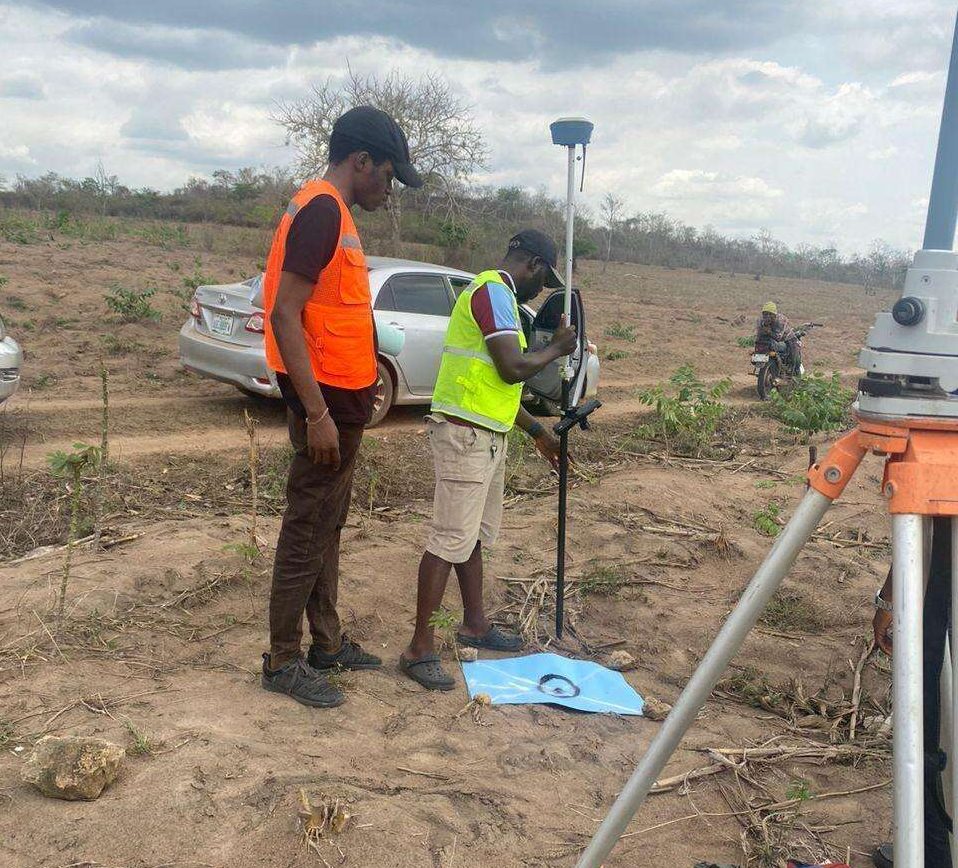
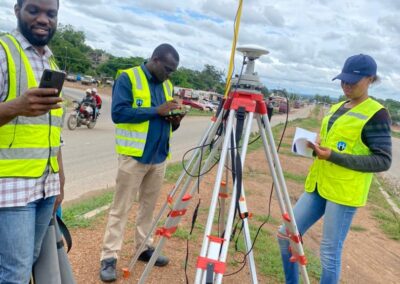
Differential GPS and GNSS Surveying — field-based training using professional DGPS equipment for centimetre-level accuracy surveying.
Total Station and Levelling — for engineering and construction applications, taught with field practice.
What Students Say
Feedback from GeoInfo Academy graduates is consistent across cohorts. The phrases that appear most frequently in reviews and testimonials include:
“100 percent practical — I was in the field from week one.”
“The instructors don’t just teach — they transfer the skill.”
“I came in knowing nothing about GIS and left with a portfolio of real projects.”
“The best decision I made for my career.”
Five-star ratings dominate the Google Business Profile, and the comments reflect not just satisfaction with the content but genuine transformation in professional capability. That is the distinguishing signal. Satisfied trainees describe course content. Transformed trainees describe outcomes.
Why the Practical Approach Matters
The geospatial job market in Nigeria — and globally — does not reward knowledge of concepts. It rewards the ability to execute. A GIS analyst who can describe supervised classification but cannot execute it in ArcGIS Pro or Google Earth Engine is not competitive. A drone surveyor who understands photogrammetry theory but has never planned and executed a real flight mission is not hireable.
GeoInfoAcademy’s training structure addresses this directly. Every module is grounded in real tools, real datasets, and real workflows. Field sessions with drones and DGPS equipment are not optional add-ons — they are core components of the programme. Students produce deliverables — orthomosaic maps, classified land cover outputs, GEE analysis scripts — that they can include in a professional portfolio.
This is the gap that most training institutions in Nigeria have not closed. GeoInfo Academy has.
The Remote Sensing Training Landscape in Nigeria
Nigeria’s geospatial training market is growing, and that growth has produced a range of options at different quality levels.
University and academic programmes offer foundational geospatial education, but the curriculum typically lags industry standards by several years and prioritises theoretical rigour over practical application. Graduates often arrive at their first job knowing what GIS is but not how to use it professionally.
Government and research-affiliated centres provide structured programmes suited to public sector and academic career paths. The training is thorough within its scope but often narrowly focused, and the software tools taught may not reflect what the private sector actually uses.
Private consulting firms with training divisions vary enormously in quality. Some are strong. Many are not. The key differentiator is whether the training is built from genuine field and project experience or assembled as a secondary revenue stream from a consulting business that does not primarily identify as a training organisation.
Standalone online platforms offer accessibility and flexibility but typically lack the supervised practical component — field sessions, real equipment, instructor correction in real time — that separates competent from confident professionals.
GeoInfoAcademy sits in a distinct position: a private training institution directly backed by an active geospatial services company, offering both the curriculum depth of a professional academy and the practical grounding of an industry operator.
Choosing the Right Centre — What to Ask Before You Enrol
Regardless of which institution you are evaluating, these are the questions that will tell you more than any brochure:
What percentage of training time is field-based or software-hands-on? If the answer is less than 60 percent, the training is primarily theoretical.
What tools and software does the training use? The answer should include ArcGIS Pro, QGIS, Google Earth Engine, and drone hardware. If it does not, the curriculum is not current.
What does a graduate’s portfolio look like? Ask to see sample outputs from previous students — maps, classified imagery, project reports. If they cannot show you, the training is not producing professional-grade deliverables.
What do past students say, specifically? Not the testimonials selected for the website. The Google reviews. The LinkedIn recommendations. The WhatsApp group conversations. Find unprompted feedback and read it carefully.
What career support exists after training? Job placement assistance, alumni networks, LinkedIn endorsements, and referrals to industry contacts are signals of an institution that is invested in outcomes, not just enrolments.
Final Takeaway
Remote sensing is one of the highest-demand, lowest-supply skill sets in Nigeria’s job market right now. The oil and gas sector, construction industry, government agencies, NGOs, and technology companies are all actively seeking geospatial professionals — and consistently finding that the supply of genuinely competent practitioners does not meet the demand.
The training decision you make determines which side of that gap you end up on.
For anyone serious about building a career in remote sensing, GIS, or drone technology in Nigeria, the standard to measure against is not what a training centre claims about itself. It is what its graduates can do on their first day of work.
By that measure, GeoInfo Academy is the institution to beat.
Enrol in the next cohort. Call or WhatsApp: 07070708909.