
Why Every Real Estate Developer in Nigeria Should Do a Soil Test Before Buying Land
Imagine investing hundreds of millions of Naira into a prime piece of real estate in Ibeju Lekki or the heart of Abuja, only to watch your structure develop massive cracks or, worse, tilt and collapse before completion. In Nigeria, building collapse has become a recurring nightmare, often tracing back to one fatal mistake: skipping the soil test.
As a developer, your reputation and capital are on the line. Before you sign that deed of assignment or move a single excavator to the site, you need to understand what lies beneath the surface.
What Exactly is a Soil Test (Geotechnical Investigation)?
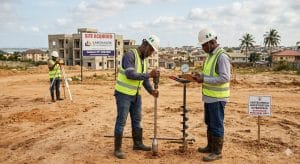
A soil test, or geotechnical investigation, is the process of analyzing the physical and chemical properties of the soil on a construction site. It isn’t just about looking at the dirt; it involves drilling deep into the earth to collect samples and testing them in a laboratory.
This process determines the bearing capacity of the soil: essentially, how much weight the ground can support without shifting or sinking. It also identifies the water table level and whether the soil contains chemicals that could corrode your foundation’s steel and concrete.
1. Avoid the Nightmare of Building Collapse
Nigeria has witnessed several tragic building collapses in recent years. While poor workmanship and substandard materials are often blamed, many of these disasters start at the foundation.
If you build a high-rise on weak soil (like the clay-heavy or swampy terrain found in much of Lagos and the Niger Delta) without the proper foundation, the building will eventually settle unevenly. A soil test tells you exactly how deep you need to go to find firm ground, ensuring your structure stands for generations.
2. Save Millions in Over-Engineering Costs
Many developers think skipping a soil test saves money. In reality, it usually leads to one of two expensive scenarios:
- Under Engineering: You build a foundation that is too weak, leading to structural failure and total loss of investment.
- Over-Engineering: Because you don’t know the soil’s strength, you spend excessively on a massive raft foundation or deep piling that the land might not even require.
A soil test provides the data needed to design a foundation that is just right: safe, stable, and cost-effective.
3. Determine the Right Foundation Type
Not every piece of land requires a pile foundation, and not every site is suitable for a simple strip foundation.
- In sandy or firm terrain, A shallow foundation might suffice.
- In swampy or reclaimed areas, you might need a raft or a deep pile foundation.
Without a soil test, your architect and structural engineer are essentially guessing. In real estate development, a guess is a gamble you cannot afford to take.
4. Understand Water Table and Drainage Risks
In regions like Port Harcourt or Lagos Island, the water table is often very high. A geotechnical report will reveal the depth of the water table, which is crucial for:
- Planning basement construction.
- Designing effective drainage systems.
- Preventing dampness from rising through the walls of the finished building.
How Geoinfotech Can Help
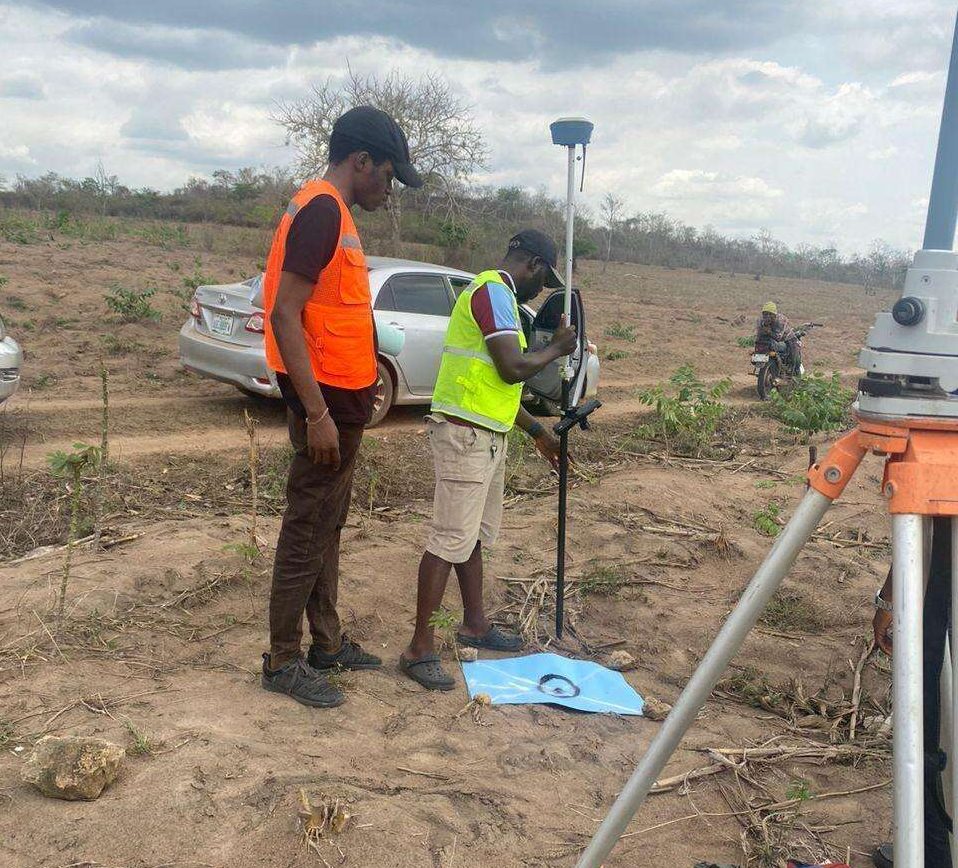
At Geoinfotech, we understand that every successful development begins with the ground beneath it. We provide comprehensive Geotechnical Investigation services tailored to the unique terrain of Nigeria.
Our team uses state-of-the-art drilling equipment and laboratory analysis to provide you with a detailed soil report. This report serves as the blueprint for your structural engineer, ensuring your project is both safe and optimized for your budget. From initial site analysis to final foundation recommendations, we help you build with confidence.
Final Takeaway
A soil test is not an extra expense; it is the most critical insurance policy for your construction project. In the competitive Nigerian real estate market, your most valuable asset is your integrity as a builder.
Don’t build on a foundation of uncertainty. Test your soil, secure your investment, and build structures that last.