

- Introduction
Urban planning in the twenty-first century increasingly relies on advanced geospatial technologies to manage the complex spatial dynamics of rapidly growing cities. Among these technologies, Geographic Information Systems (GIS) have emerged as one of the most powerful tools for analyzing spatial relationships, modeling urban processes, and supporting evidence-based planning decisions. GIS integrates spatial data, remote sensing imagery, and attribute information to create digital representations of urban environments. Through spatial analysis, GIS enables planners to visualize land-use patterns, monitor urban growth, assess environmental risks, and plan infrastructure development more efficiently. In rapidly urbanizing cities such as Lagos, GIS plays a particularly critical role. Lagos is widely recognized as one of the fastest-growing megacities in the world, characterized by rapid population expansion, intensive land-use transformation, and increasing pressure on infrastructure and natural resources.
Urban planners in Lagos face numerous challenges, including:
- Uncontrolled urban expansion
- Housing shortages
- Transportation congestion
- Environmental degradation
- Flooding and climate vulnerability
- Informal settlements and slum proliferation
GIS provides powerful analytical capabilities to address these challenges through spatial data integration, predictive modeling, and geospatial visualization. This study examines the various applications of GIS in urban planning in Lagos, highlighting real-world case studies that demonstrate how geospatial technologies are transforming planning practice in Nigeria’s largest metropolitan region.
- Urbanisation and Spatial Growth of Lagos
There are relationships between urbanisation and spatial growth in cities or areas on the earth surface and these discussed herein.
2.1 Historical Urban Development
Lagos has evolved from a small coastal settlement in the nineteenth century into a massive metropolitan region covering more than 1,170 square kilometers. The city’s development can be divided into several phases:
- Colonial Era (Pre-1960): Urban development during the colonial period was concentrated around Lagos Island, Apapa, Yaba and Ebute-Metta. Planning was relatively organized and followed British colonial planning models.
- Post-Independence Expansion (1960–1990): Rapid rural-urban migration caused major urban expansion into mainland areas such as: Surulere, Ikeja, Mushin and Agege. However, urban infrastructure development could not keep pace with population growth.
- Megacity Growth Phase (1990–Present): Since the 1990s, Lagos has experienced explosive spatial expansion, with large metropolitan corridors developing toward: Lekki Peninsula, Ikorodu, Badagry and Epe. The built-up area of Lagos has expanded dramatically, replacing wetlands, forests, and agricultural lands. GIS and remote sensing techniques are extensively used to monitor these spatial transformations and support long-term urban planning strategies.

- Role of GIS in Modern Urban Planning
GIS serves as a spatial decision-support system that allows urban planners to integrate diverse datasets into a unified geospatial framework. The key capabilities of GIS include:
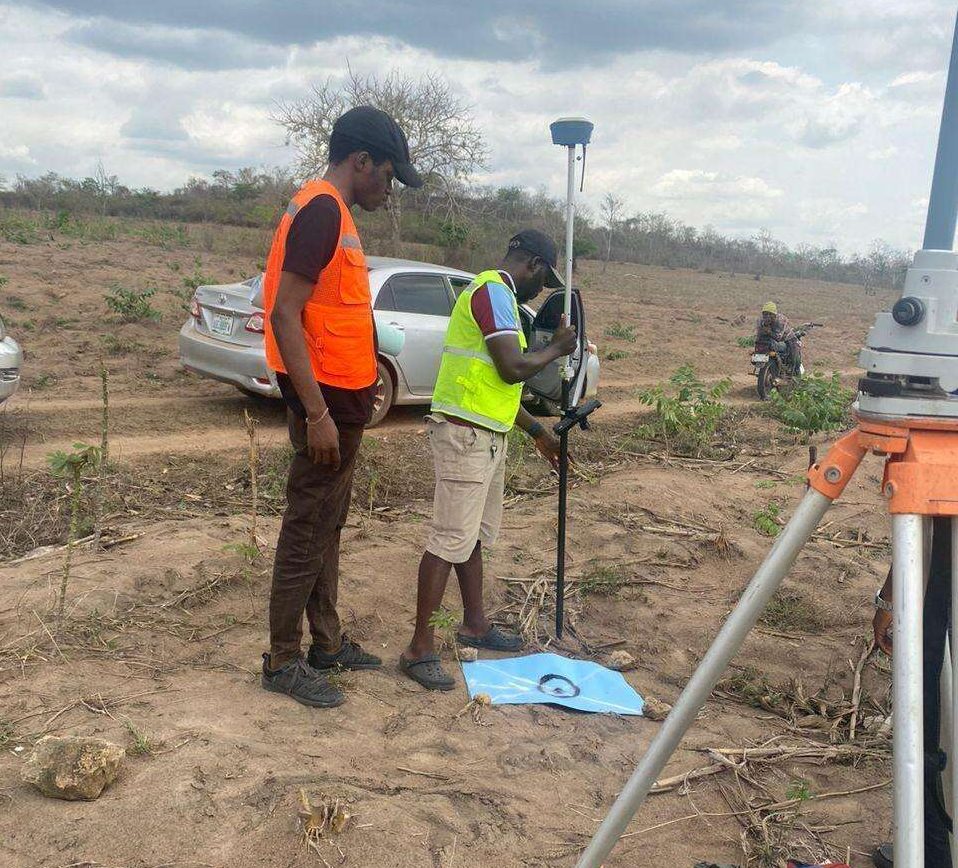
- Spatial Data Integration: GIS integrates various datasets such as: Satellite imagery, topographic maps, cadastral maps, socioeconomic data, transportation networks and environmental data. These datasets can be layered and analyzed together to understand spatial relationships and urban dynamics.
- Spatial Modeling and Analysis: Urban planners use GIS to perform advanced spatial analyses such as: Land suitability analysis, urban growth modeling, network analysis, hydrological modeling and environmental impact analysis
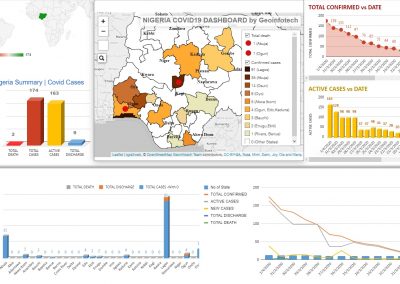
- Visualization and Decision Support: GIS produces powerful visual outputs such as: thematic maps, 3D city models, spatial dashboards and geospatial databases. These outputs support planning decisions and facilitate communication between planners, policymakers, and stakeholders.
- Major GIS Applications in Urban Planning in Lagos
4.1 Land Use and Land Cover Mapping
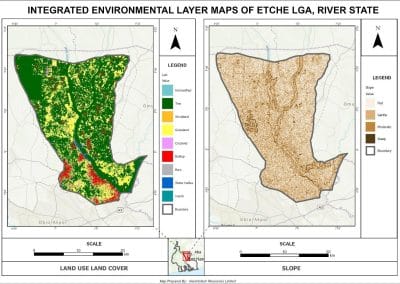
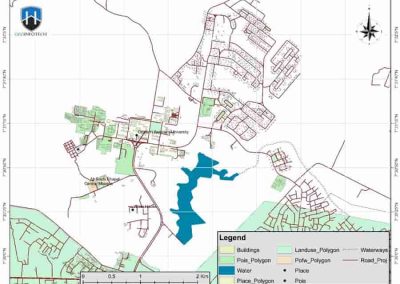
One of the most fundamental GIS applications in urban planning is land-use and land-cover mapping. Using satellite imagery and remote sensing techniques, GIS helps planners classify land into different categories such as: residential areas, commercial zones, industrial districts, transportation infrastructure, vegetation cover, wetlands and water bodies. In Lagos, GIS-based land-use analysis has revealed significant spatial transformation characterized by:
- rapid expansion of built-up areas
- reduction of green spaces
- reclamation of wetlands
- increased density of informal settlements
These insights help planners design zoning regulations, monitor land development, and protect environmentally sensitive areas.
4.2 Monitoring Urban Sprawl
Urban sprawl is a major planning challenge in Lagos due to uncontrolled urban expansion. GIS and remote sensing enable planners to conduct multi-temporal spatial analysis to track urban growth patterns over time. Techniques commonly used include satellite image classification, change detection analysis, spatial overlay analysis and urban growth modeling. GIS studies have shown that Lagos has experienced dramatic urban expansion toward the Lekki-Epe corridor and other suburban areas. These analyses help planners predict future growth patterns, guide infrastructure investment, manage suburban expansion and protect agricultural lands.
- Flood Risk Mapping and Urban Resilience
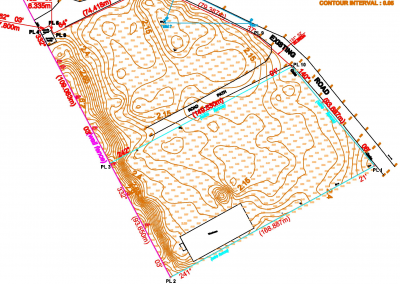
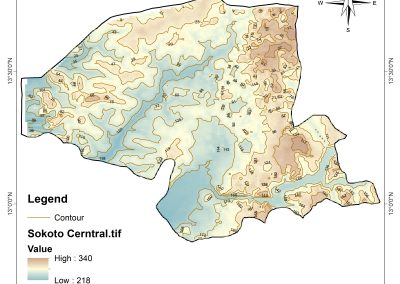
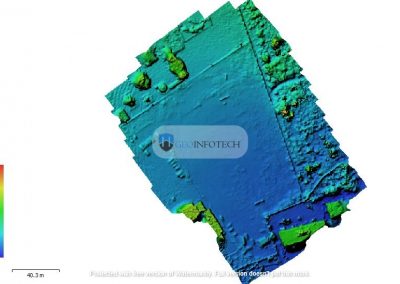
Flooding is one of the most severe environmental hazards affecting Lagos due to its low-lying coastal geography. GIS plays a critical role in flood risk assessment and disaster management. Using spatial data such as digital Elevation Models (DEM), rainfall records, drainage networks and land-use maps. GIS enables planners to simulate flood scenarios and identify vulnerable areas. Flood risk maps produced through GIS analysis help authorities: design effective drainage systems, regulate construction in flood-prone areas, develop early warning systems and plan evacuation routes. Such applications are particularly important in coastal districts vulnerable to sea-level rise and extreme rainfall events.
4.4 Transportation Planning and Traffic Management
Transportation congestion is one of the most critical urban challenges in Lagos. GIS is widely used for transportation network analysis, allowing planners to evaluate traffic flows and optimize road infrastructure. GIS applications in transportation planning include road network mapping, traffic congestion analysis, route optimization, accessibility modeling and public transport planning. For example, GIS has been used to analyze commuting patterns between residential districts and employment centers. These insights support the planning of transportation initiatives such as Bus Rapid Transit (BRT) systems, new road corridors, and urban rail development. GIS-based transportation models help planners design more efficient mobility systems.
4.5 Digital Land Administration and Cadastral Systems
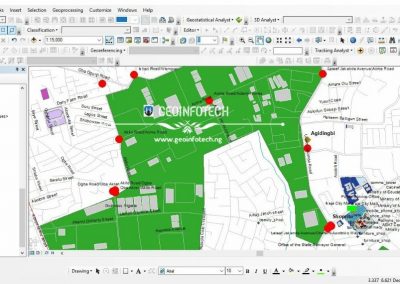
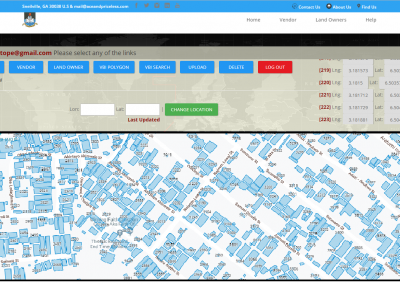
Land administration is a major urban governance challenge in Lagos. GIS plays an essential role in modernizing cadastral systems through digital land records and spatial databases. The Lagos State government launched the Lagos Electronic Geographic Information System (e-GIS) to digitize land records and integrate spatial data across government agencies. The system supports digital cadastral mapping, land title registration, property identification and land-use regulation. GIS-based land administration improves: transparency in land management, efficiency of land transactions and reduction of land disputes. It also provides reliable spatial data for urban planning.
- Case Studies of GIS Applications in Lagos
5.1 Festac Town Urban Encroachment Study
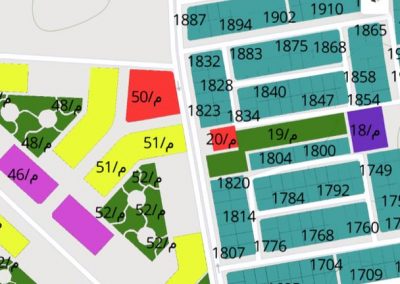
Festac Town was originally developed as a planned residential estate. GIS studies comparing the original master plan with current land-use patterns revealed: significant encroachment into designated open spaces, conversion of recreational areas into residential and commercial developments, and loss of green infrastructure. Spatial analysis identified over 1.4 km² of land encroachment, demonstrating the importance of GIS monitoring for enforcing planning regulations.
5.2 Urban Heat Island Study in Kosofe
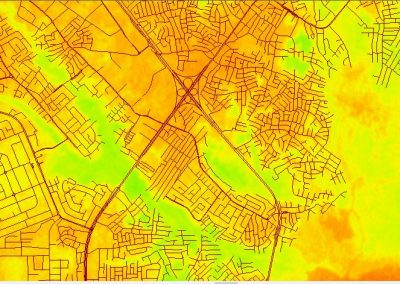
Urban heat islands occur when dense urban development increases surface temperatures. A GIS-based study conducted in Kosofe used satellite thermal imagery to analyze land surface temperature variations. The study revealed that areas with high building density and low vegetation cover experienced significantly higher temperatures. GIS-based temperature mapping helps planners identify locations where urban greening programs should be implemented.
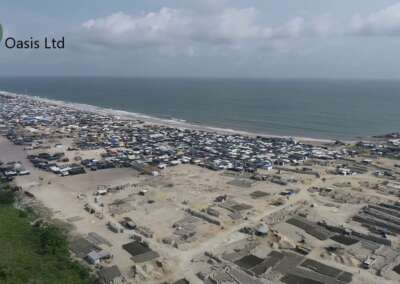
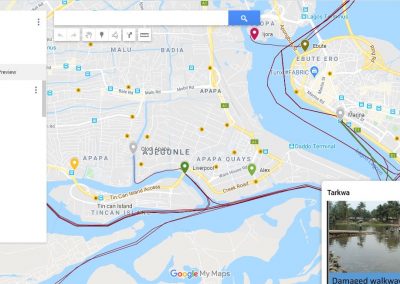
5.3 Informal Settlement Mapping in Makoko
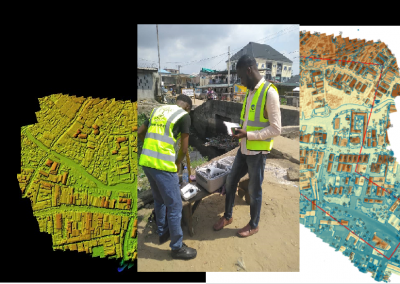
Makoko is one of the most well-known informal settlements in Lagos. GIS and remote sensing have been used to map the spatial structure of the settlement and analyze population density. GIS analysis supports: slum upgrading programs, infrastructure planning, and sanitation improvements. These insights help policymakers design targeted urban renewal interventions.
- Institutional Use of GIS in Lagos
Several government agencies use GIS technologies for urban planning and management. The key institutions include: Lagos State Ministry of Physical Planning and Urban Development Lagos State Lands Bureau and Office of the Surveyor‑General of Lagos State. These agencies maintain geospatial databases that support: land registration, development control, infrastructure planning and environmental monitoring
- Future Prospects of GIS in Lagos Urban Planning
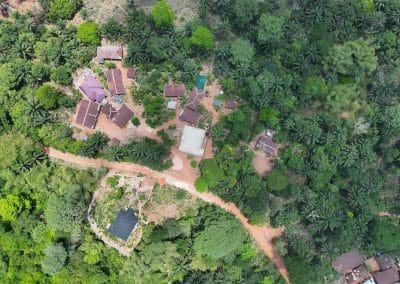
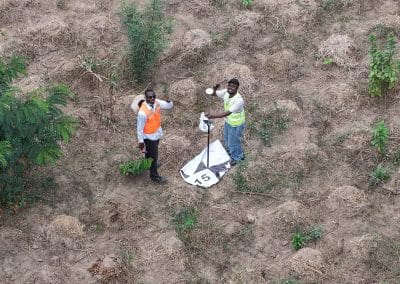
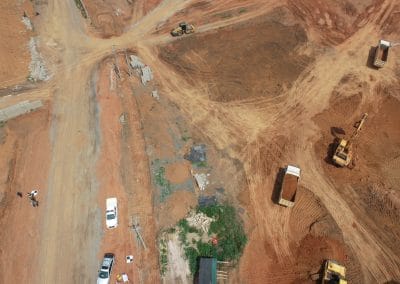
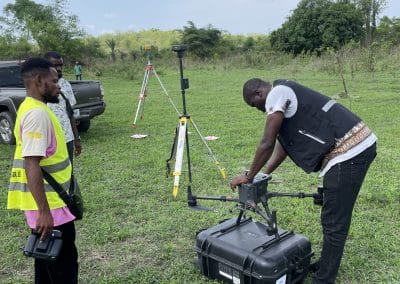
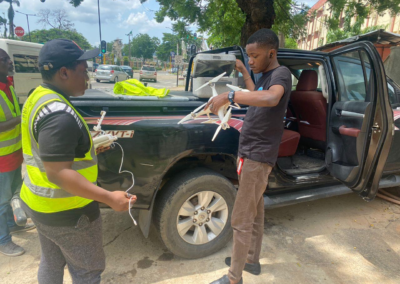
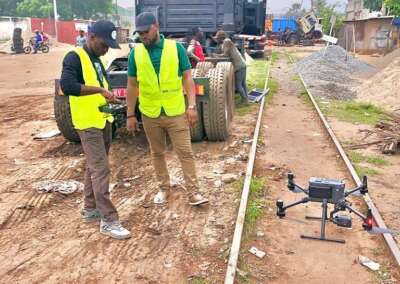
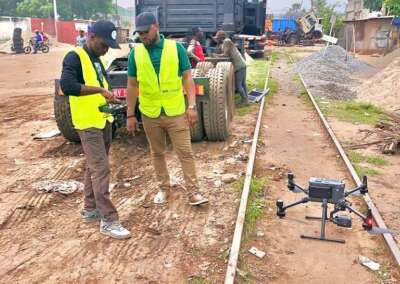
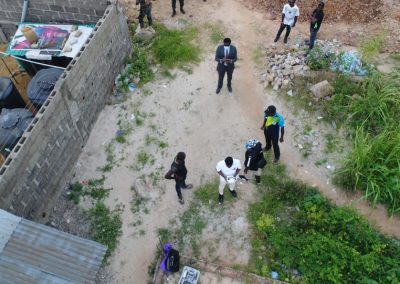
The future of GIS in Lagos urban planning is promising due to emerging geospatial technologies. Future developments include: drone-based urban mapping, AI-driven spatial analytics, real-time geospatial monitoring, smart city GIS platforms, 3D urban modeling and digital twin cities. These technologies will enable planners to simulate urban scenarios, predict future growth, and design more sustainable cities.
- Conclusion
GIS has become an indispensable tool in urban planning in Lagos. The technology enables planners to analyze spatial patterns, monitor urban growth, manage land resources, and address environmental challenges. Through applications such as land-use mapping, flood risk assessment, transportation planning, and digital land administration, GIS significantly improves the efficiency and effectiveness of urban planning processes. As Lagos continues to evolve into a megacity, the integration of GIS with emerging technologies such as artificial intelligence, drones, and smart city platforms will play a crucial role in shaping sustainable urban development