

- Introduction
Agriculture remains one of the most important sectors of the Nigerian economy, employing a large percentage of the population and contributing significantly to national food security. However, traditional farming practices often face challenges such as low productivity, pest infestations, poor irrigation management, and inefficient monitoring of large farmlands. In recent years, drone technology, also known as Unmanned Aerial Vehicles (UAVs), has emerged as an innovative solution for modern agriculture. Drones provide farmers with aerial data, precision monitoring, and improved farm management tools. This report examines how drones are helping Nigerian farmers improve productivity, optimize farm operations, and enhance sustainable agricultural practices. Agriculture plays a vital role in Nigeria’s socio-economic development. The sector provides employment, supports rural livelihoods, and contributes significantly to the country’s Gross Domestic Product (GDP). Despite its importance, Nigerian agriculture still faces numerous challenges, such as:
- Poor farm monitoring
- Climate variability
- Pest and disease outbreaks
- Inefficient fertilizer and pesticide application
- Limited access to modern agricultural technologies
With the advancement of precision agriculture, drone technology is becoming an effective tool for addressing many of these challenges. Agricultural drones can capture high-resolution aerial images, analyze crop health, monitor irrigation systems, and support data-driven decision-making. These capabilities are gradually transforming farming practices in Nigeria.
- Overview of Agricultural Drone Technology
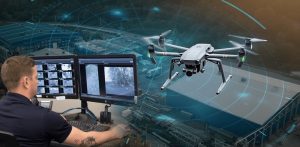
Agricultural drones are unmanned aerial systems equipped with sensors, cameras, GPS receivers, and data processing software. These systems can fly over farmland and collect geospatial data used for agricultural analysis.
Typical components of agricultural drones include:
- High-resolution RGB cameras
- Multispectral sensors
- Thermal imaging sensors
- Global Positioning System (GPS)
- Geographic Information System (GIS) integration
These technologies enable drones to capture precise information about farmland conditions, crop health, soil quality, and irrigation efficiency.
- Applications of Drones in Nigerian Agriculture
There are different areas of drone application in Nigerian agriculture, and they are outlined as follows:
3.1 Crop Monitoring and Health Assessment
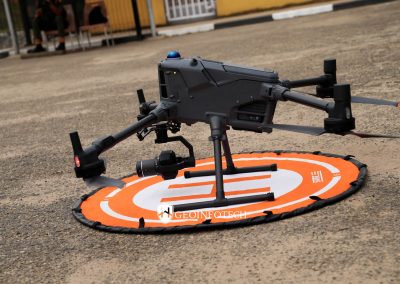
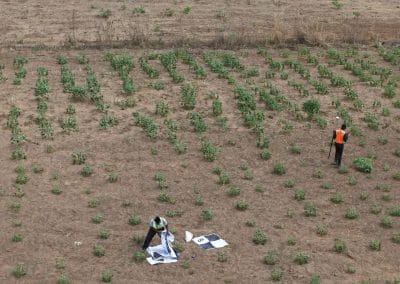
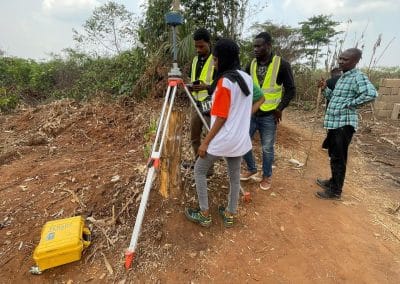
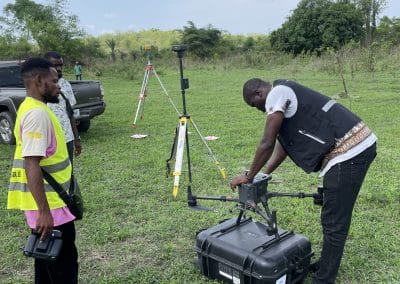
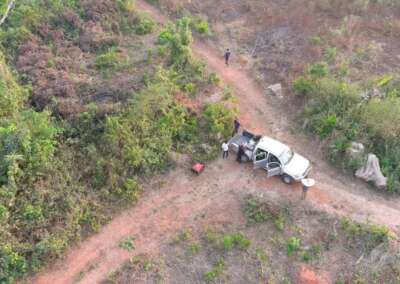
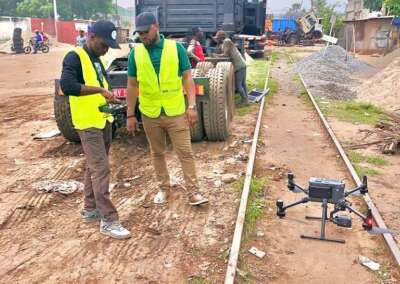
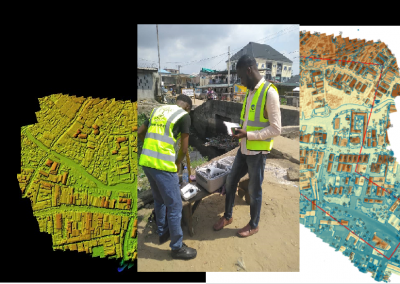
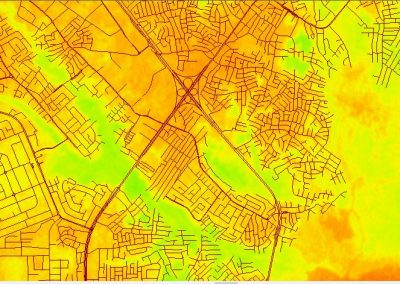
One of the most significant uses of drones in Nigerian agriculture is crop monitoring. Farmers can use drones to regularly inspect their fields, monitor crop growth throughout the planting season, and monitor crop health as shown in Figure 1.
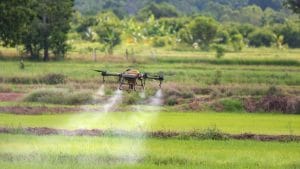
Figure 1: Drone Operation on Farmland
Drones equipped with high-resolution cameras and multispectral sensors capture detailed images of farmland. These images allow farmers to detect problems such as:
- Pest infestations
- Plant diseases
- Nutrient deficiencies
- Water stress
- Uneven crop growth
By identifying these issues early, farmers can take corrective actions before the damage spreads across the entire farm. For example, sensors using NDVI (Normalized Difference Vegetation Index) can analyse plant health based on light reflection patterns, helping farmers quickly detect stressed crops.
Drones capture aerial images that reveal important details about crop conditions, including:
- Plant growth patterns
- Areas affected by pests or diseases
- Nutrient deficiencies
- Water stress
Using specialized software, these images can be analyzed through vegetation indices such as Normalized Difference Vegetation Index (NDVI), which helps farmers detect unhealthy crops before visible symptoms appear. Early detection allows farmers to take corrective measures promptly, preventing large-scale crop damage.
3.2 Precision Application of Fertilizers and Pesticides
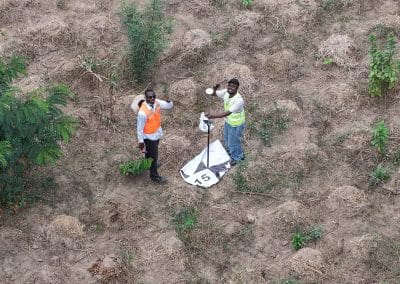
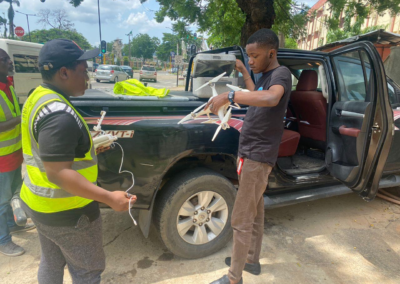
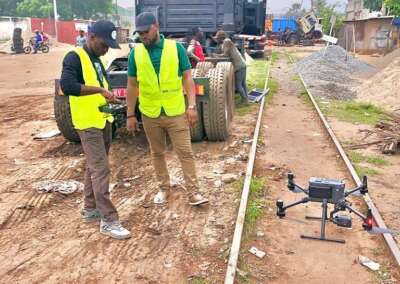
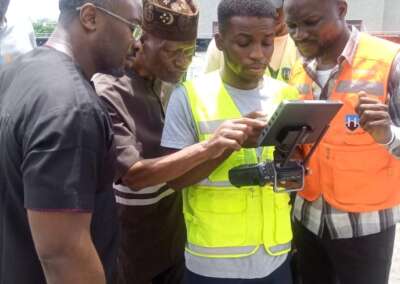
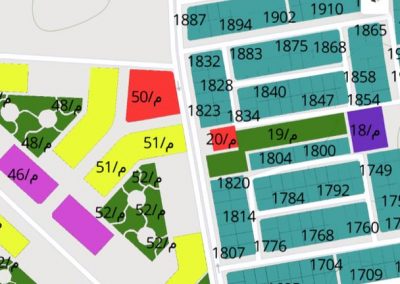
Another critical application of drones is precision spraying of agrochemicals (Figure 2). Traditional spraying methods often involve manual labor or tractor-based systems that apply chemicals uniformly across the entire farm. This approach can result in:
- Over-application of chemicals
- Environmental pollution
- Increased production costs
Drone spraying technology allows farmers to apply fertilizers, herbicides, and pesticides only where they are needed. This targeted application improves efficiency, reduces chemical waste, improves crop protection, protects soil and water from excessive chemicals. It also minimizes farmers’ exposure to harmful chemicals during manual spraying. Some Nigerian farmers have reported up to 30% savings on agrochemicals using drone spraying systems.
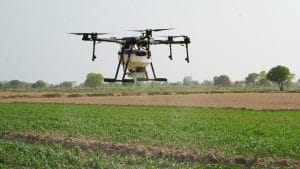
Figure 2: Precision Spraying of Agrochemicals
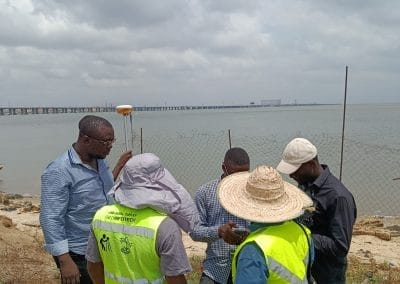
3.3 Farm Mapping and Land Surveying
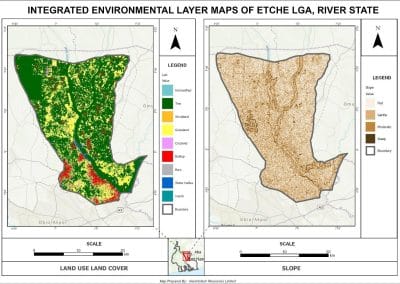
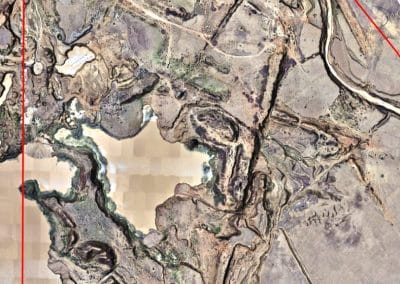
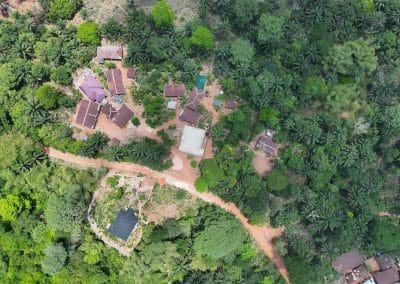
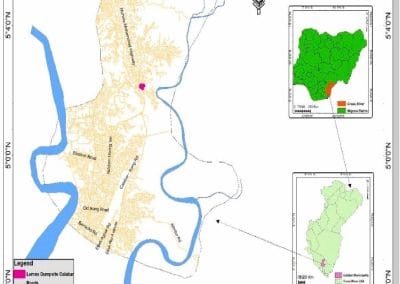
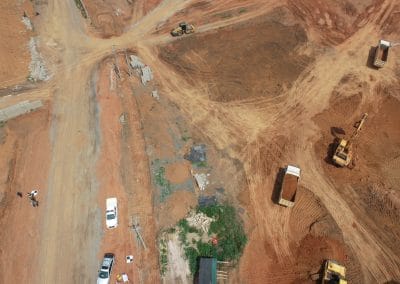
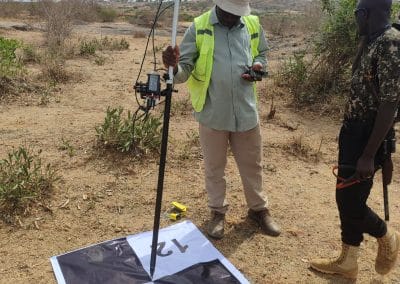
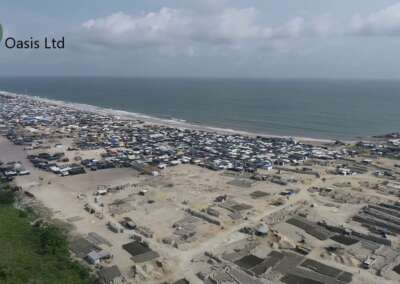
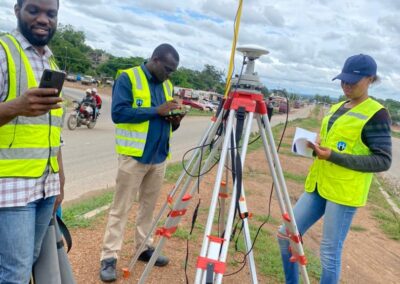
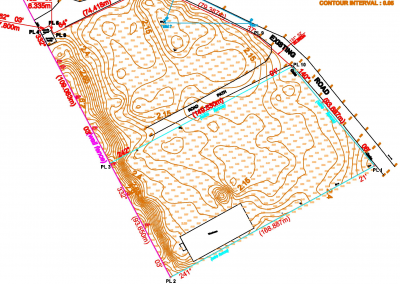
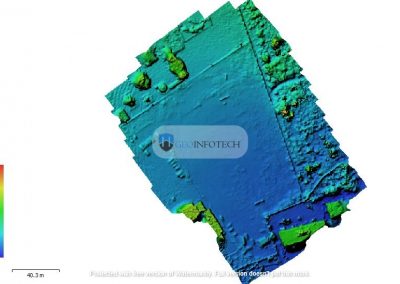
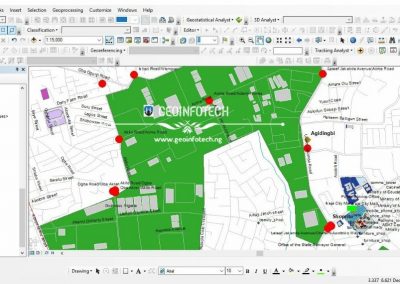
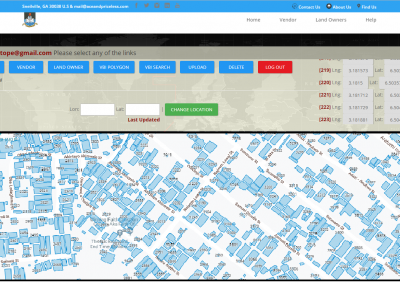
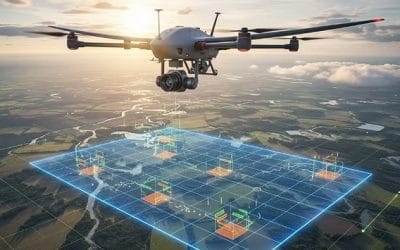
Drones are also widely used for mapping agricultural land and producing accurate farm maps (Figure 3). These maps help farmers understand the spatial characteristics of their farms, including slope, drainage patterns, and land use distribution. Such information is essential for planning irrigation systems, planting patterns, and soil conservation strategies. Drones are widely used to map farmland and create digital maps of agricultural fields. Using aerial imaging and GPS technology (or through aerial photogrammetry and GPS positioning), drones can:
- Produce topographic maps of farmland
- Measure field boundaries
- Identify drainage patterns
- Detect erosion-prone areas
- Orthomosaic maps
- Digital elevation models (DEM)
This information helps farmers plan irrigation systems, planting patterns, and farm expansion more effectively.
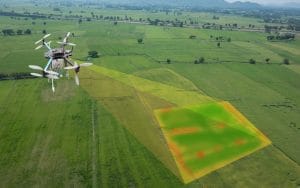
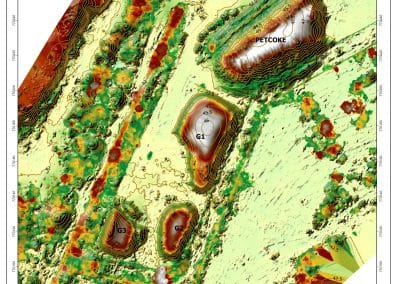
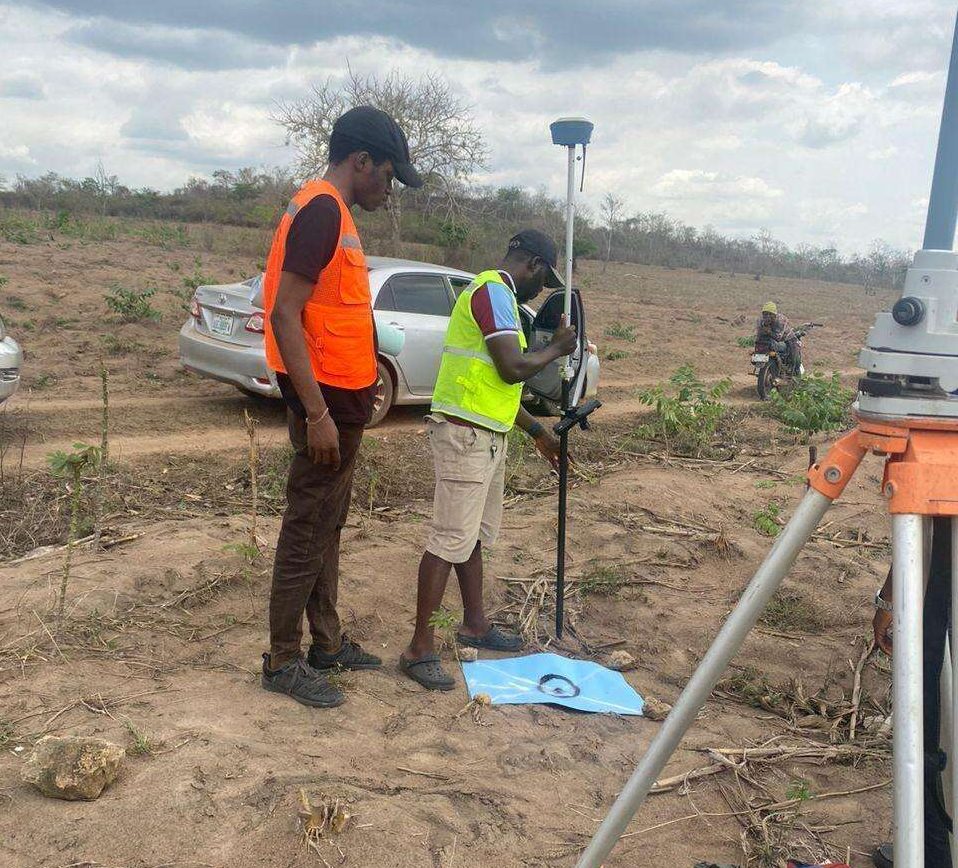
Figure 4: Farm Mapping and Land Surveying
3.4 Irrigation and Water Management
Water management is a major challenge for farmers in many parts of Nigeria, especially in dry regions. Drones equipped with thermal sensors can detect variations in soil moisture across farmland. Thermal imaging enables farmers to identify:
- Areas experiencing water stress
- Over-irrigated sections
- Blocked irrigation channels
- Uneven water distribution
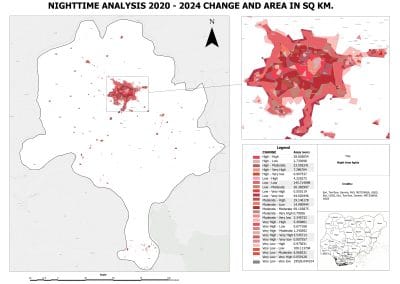
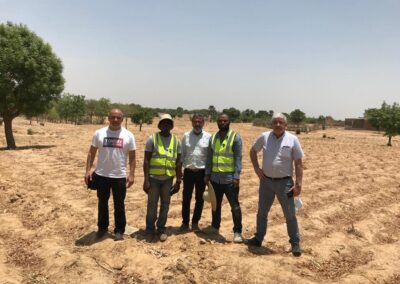
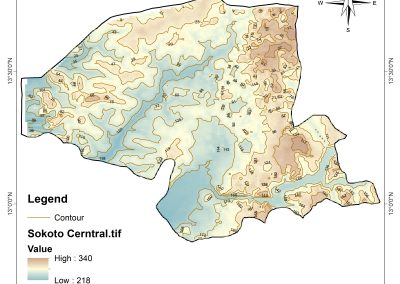
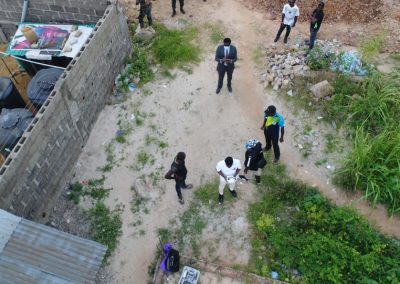
By identifying these problems early through drones, farmers can adjust irrigation systems to ensure efficient water usage and prevent crop losses. This implies that the use of drones allows farmers to optimise irrigation and avoid wasting water, which improves crop growth and sustainability. Figure 4 shows a drone surveying a farmland.
3.5 Faster and More Efficient Farm Inspection
Manual farm inspection can be time-consuming, especially for large farms. Farmers often need several hours or days to inspect their entire fields.
Drones significantly reduce this effort by allowing farmers to:
- Inspect hundreds of hectares within minutes
- Monitor crop development frequently
- Quickly detect problems affecting crop growth
Frequent monitoring ensures that farmers respond promptly to pests, diseases, and environmental stress factors.
3.6 Soil Analysis and Field Planning
Before planting crops, drones can help farmers conduct soil and terrain analysis. Aerial images collected by drones provide information about soil variability across farmland.
These data help farmers determine:
- Suitable planting zones
- Soil temperature
- Soil moisture distribution/levels
- Soil erosion risks
- Nutrient distribution
- Fertility variation within fields
Such information enables farmers to implement site-specific farming techniques, where different parts of the farm receive different treatments based on their soil conditions. it also helps farmers in determining the best areas for planting different crops and improving soil management strategies
- Conclusion
Drone technology is rapidly transforming agricultural practices in Nigeria by providing farmers with advanced tools for crop monitoring, precision spraying, land mapping, irrigation management, and soil analysis. These capabilities allow farmers to make informed decisions, reduce production costs, and increase crop yields. Although challenges such as cost and technical capacity remain, continued investment in agricultural technology and training will promote wider adoption of drones. Ultimately, the integration of drones into Nigerian agriculture represents a critical step toward achieving sustainable farming and improved food security.