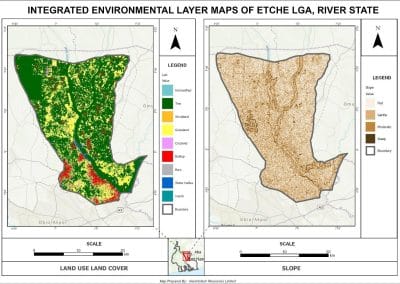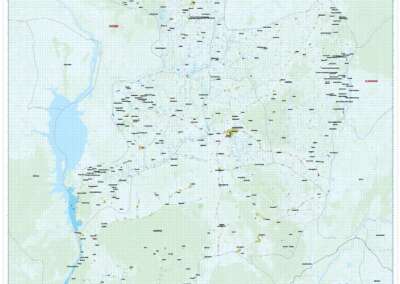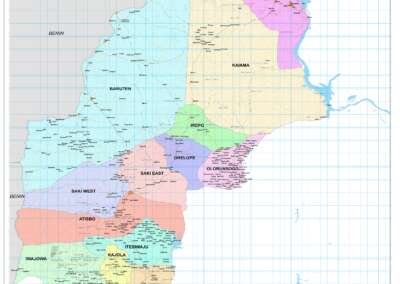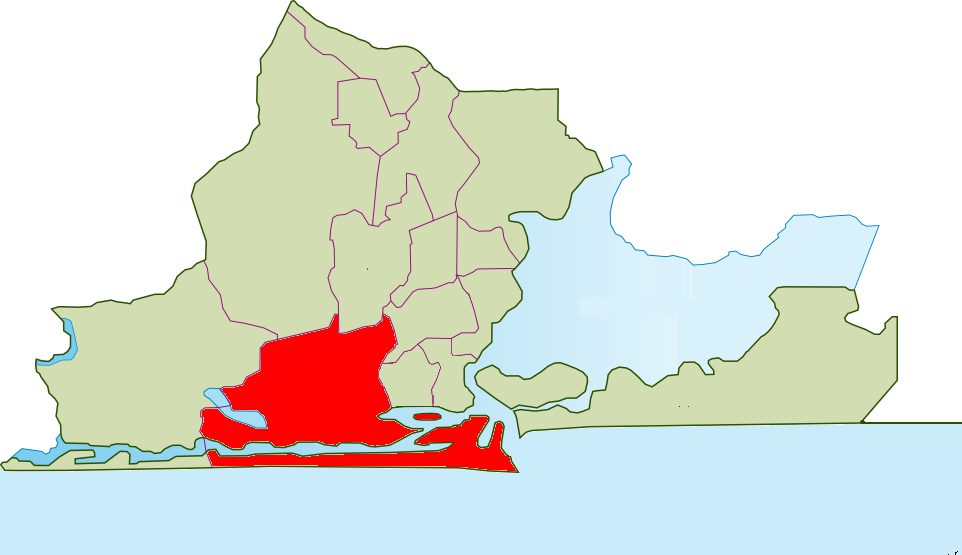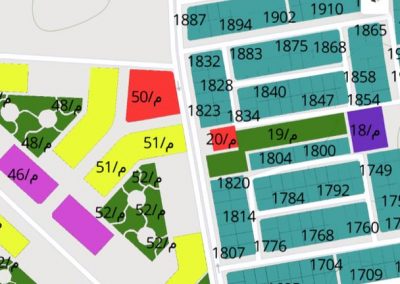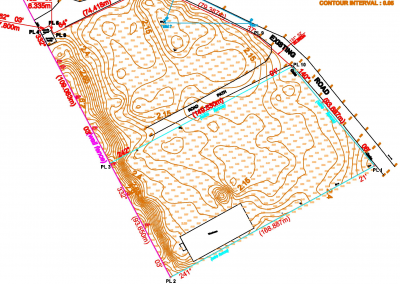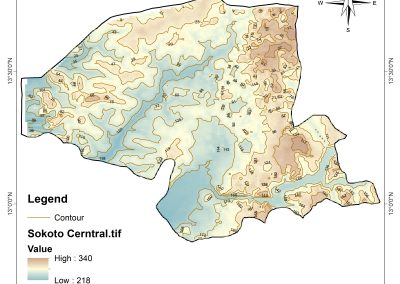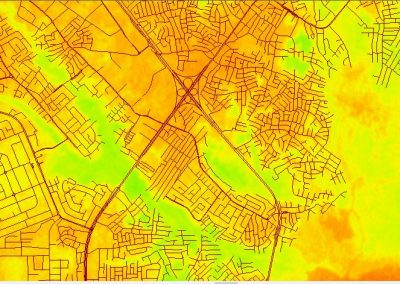

Understanding our terrain is the first step toward sustainable development. In the realms of geography and environmental science, Land Use and Land Cover (LULC) serve as the foundational blueprints for managing our planet. While often used interchangeably, they represent two distinct perspectives of our environment:
- Land Cover: Refers to the physical materials on the Earth’s surface, such as forests, wetlands, water bodies, or built-up areas.
- Land Use: Describes the human intent behind the land, including agriculture, mining, recreation, or urban development.
By analyzing these two factors together, we gain a comprehensive view of how humans interact with the natural landscape and how those interactions evolve over time.
What LULC Data Reveals About Our Environment
LULC data provides more than just a map; it offers a narrative of regional transformation. Through high-quality datasets, users can identify:
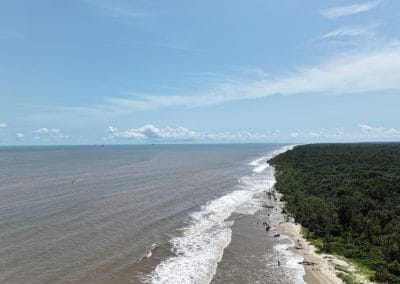
- Natural Landscapes: The health and extent of forests, grasslands, and water bodies.
- Agricultural Footprints: The distribution of croplands, orchards, and plantations.
- Urbanization: The growth of residential, industrial, and transportation networks.
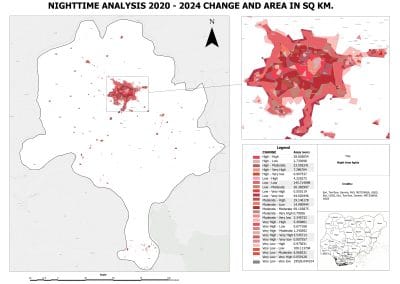
- Temporal Trends: Critical shifts such as deforestation, urban expansion, and wetland reclamation.
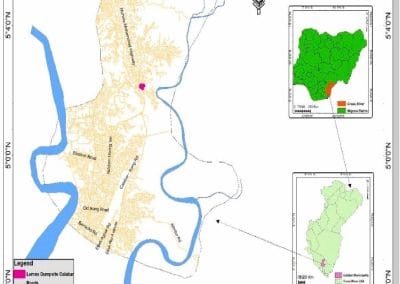
- Spatial Patterns: The specific location and proportion of different land classes within a region.
Why LULC is Vital for Nigeria’s Growth
For a country as dynamic as Nigeria, LULC data is not just academic—it is a critical tool for policy and decision-making. It bridges the gap between complex environmental science and practical, actionable strategies. Key applications include:
- Urban and Regional Planning: Informing sustainable growth, zoning, and infrastructure development.
- Environmental Monitoring: Tracking habitat loss and forest degradation to protect biodiversity.
- Resource Management: Optimizing food security strategies and agricultural patterns.
- Disaster Preparedness: Supporting climate modeling and flood risk assessments.
The Technology Behind the Map
Generating accurate LULC maps requires integrating diverse data streams. Modern analysts rely on:
- Satellite Imagery: Platforms like Landsat and Sentinel-2 provide broad coverage of vegetation and water.
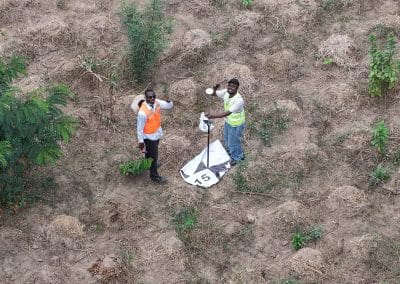
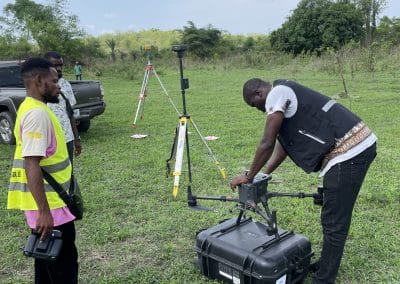
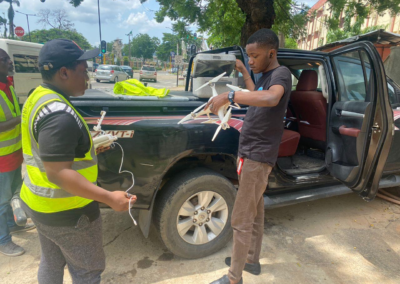
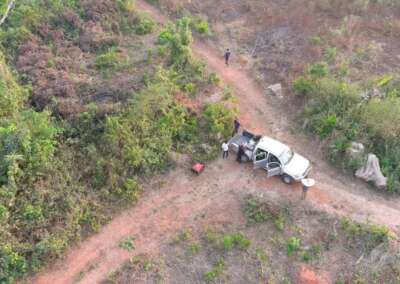
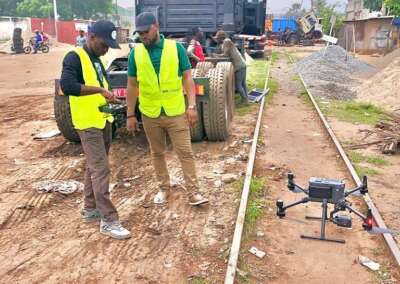
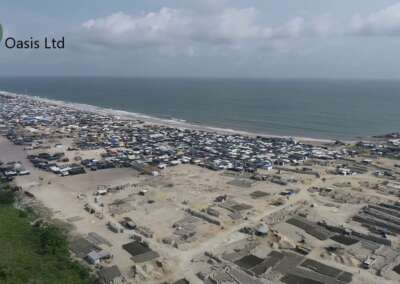
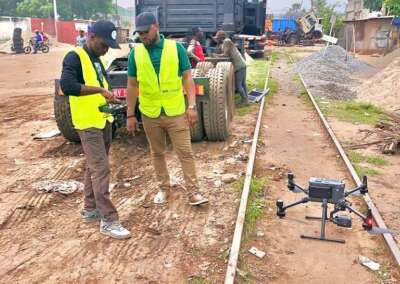
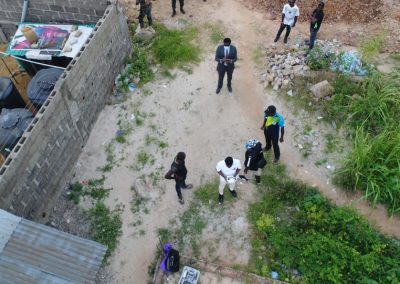
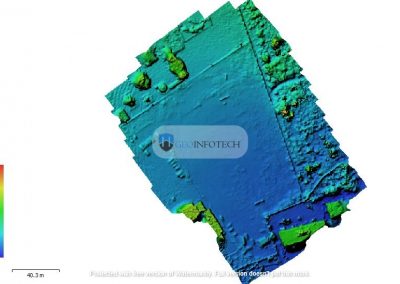
- Aerial Surveys: Drones and aerial imagery capture fine-grained local details.
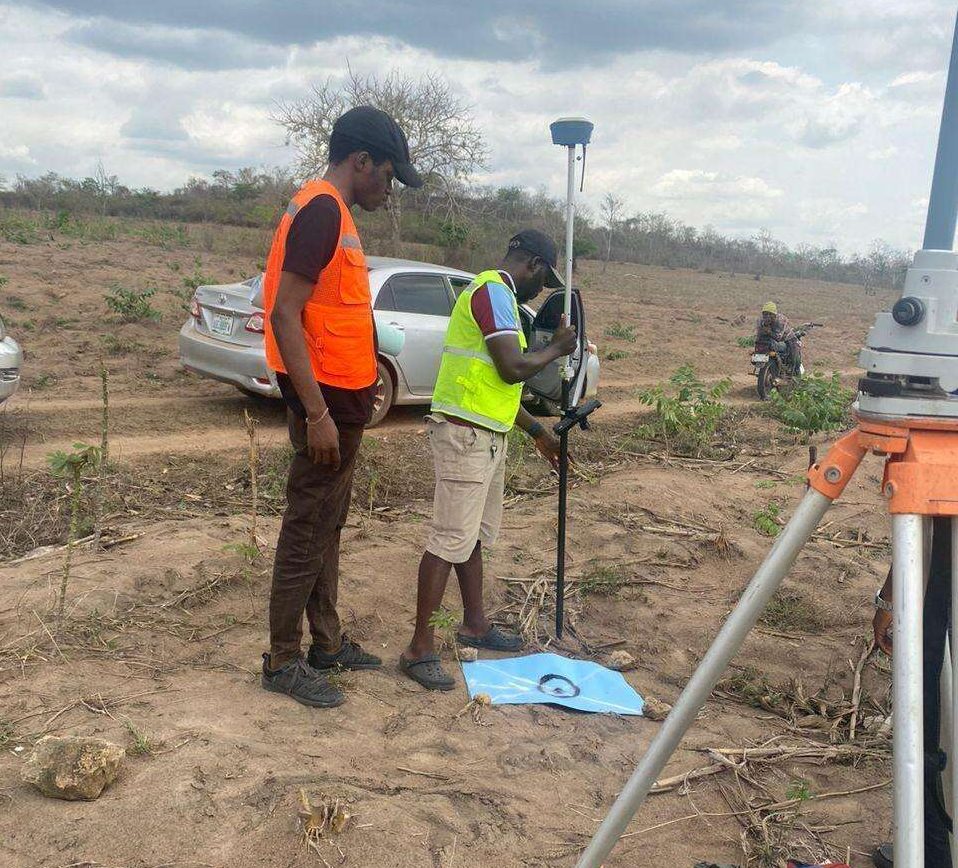
- Geospatial Datasets: Resources from government agencies and platforms like OpenStreetMap (OSM) provide essential administrative and infrastructure data.

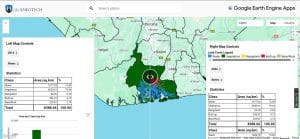
Introducing the LULC Nigeria Web App by Geoinfotech
To make this complex data accessible, Geoinfotech Resource Limited developed an interactive LULC Nigeria Web App. Built on the powerful Google Earth Engine (GEE), this tool transforms raw satellite data into an intuitive interface for both professionals and the public.
Key Features of the App:
- Interactive Comparisons: Users can drag or swipe between different years to visualize over a decade of land-use changes.
- Detailed Metrics: The app provides the exact area (sq. km) and percentage for each land cover class.
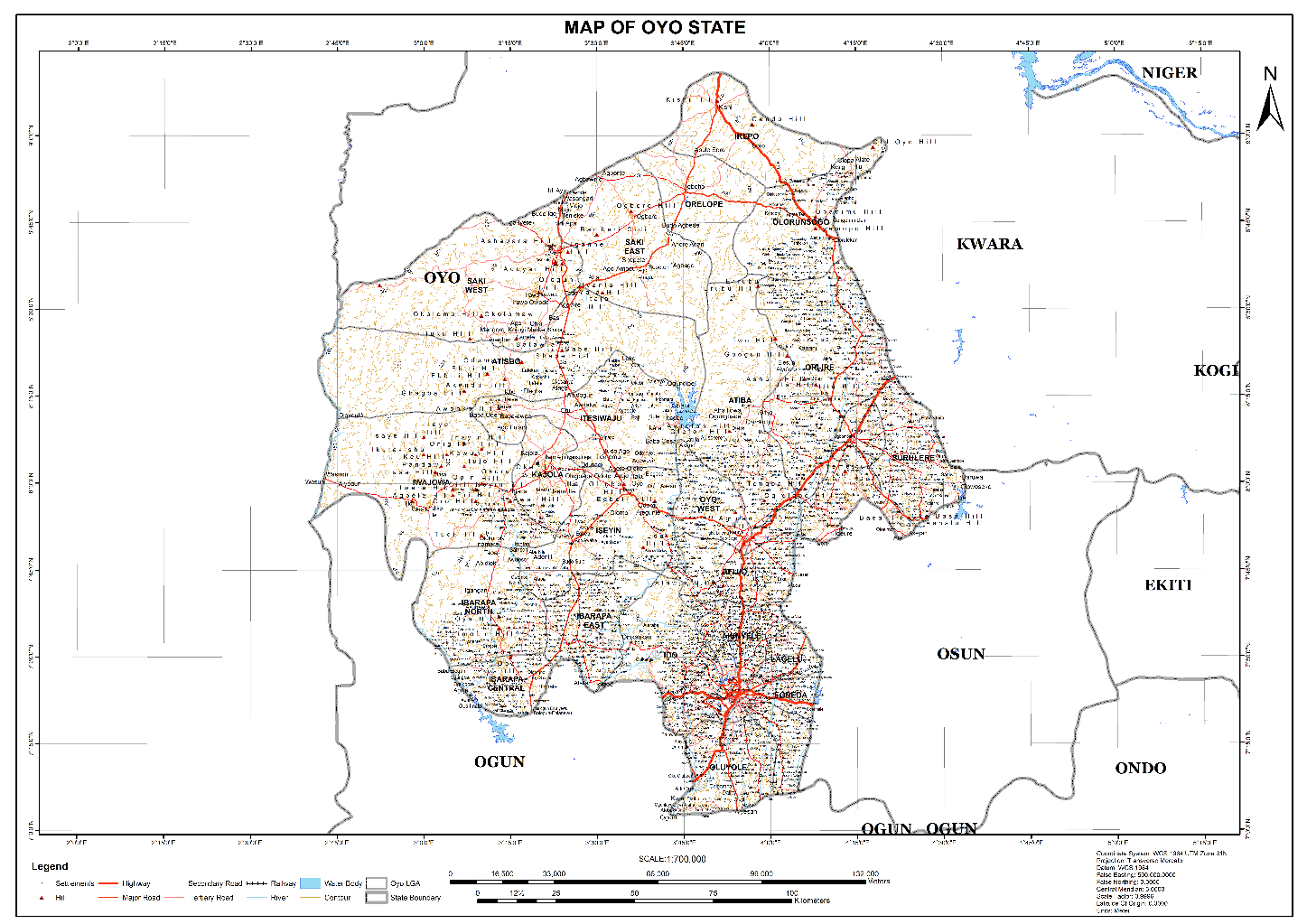
- Focused Exploration: Users can zoom into specific Nigerian states for localized analysis.
- User-Friendly Interface: Side panels allow for quick selection of states and years, with maps updating automatically.
Whether you are a researcher studying land dynamics, a planner mapping out the next urban project, or a citizen curious about environmental shifts, this app provides a practical window into Nigeria’s changing landscape.
Explore the App here: https://geoinfostore.com/