In the Nigerian surveying landscape, choosing between a Total Station and a GNSS (Global Navigation Satellite System) receiver is like choosing between a scalpel and a power saw. Both are vital, but using the wrong one in the wrong terrain can cost you time, accuracy, and most importantly your professional reputation.
As urban development explodes in cities like Lagos, Abuja, and Port Harcourt, the pressure is on. Should you stick with the classic precision of a Total Station, or is it time to fully embrace the speed of GNSS RTK? Let’s break it down.
🏗️ 1. The Total Station: The King of Urban Precision
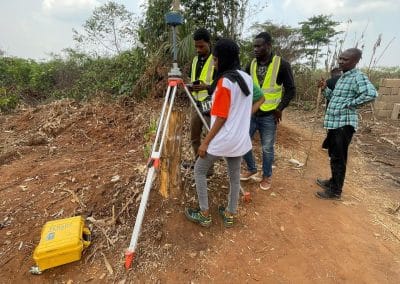
The Total Station remains the gold standard for high-accuracy work in Nigeria’s dense urban centers. Whether you are setting out a skyscraper in Victoria Island or defining a tight boundary in Ikeja, the Total Station offers millimeter precision that satellites sometimes struggle to match.
Pros: Independent of satellite signals; perfect for “urban canyons” (streets with tall buildings); superior vertical (height) accuracy.
Cons: Requires a clear line-of-sight; slower setup; usually requires a two-person team.
Best For: Construction staking, bridge engineering, and small-scale cadastral surveys.
🛰️ 2. GNSS (RTK/PPK): The Speed Demon of the Savannah
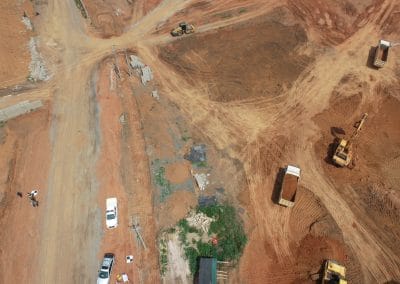
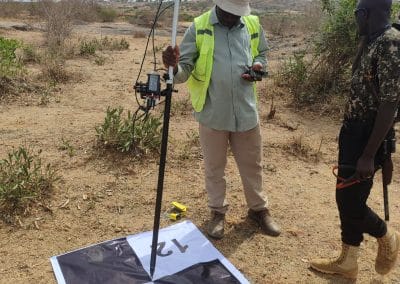
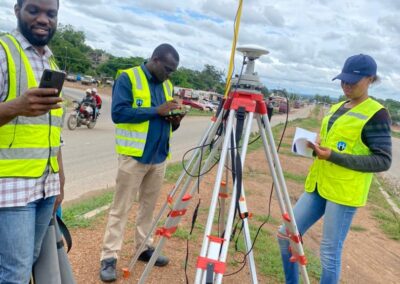
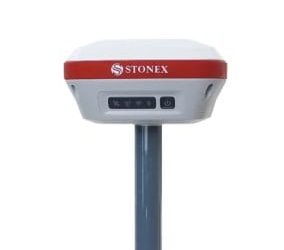
If you’ve ever had to map 50 hectares of farmland in Epe or a new estate in Mowe-Ibafo, you know that a Total Station would take weeks. A GNSS RTK Rover can do it in days (or hours).
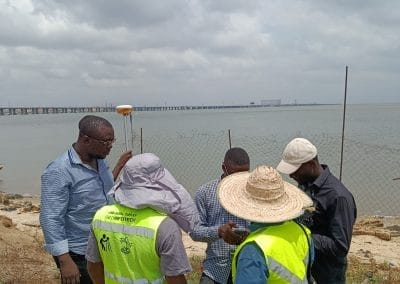
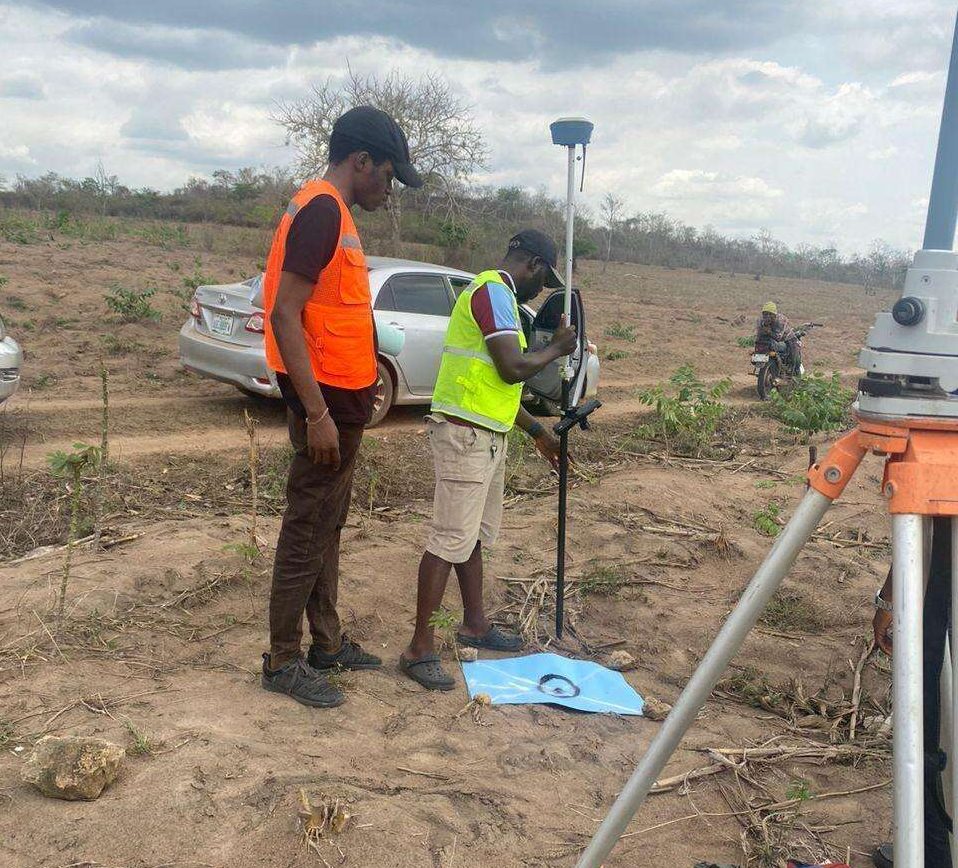
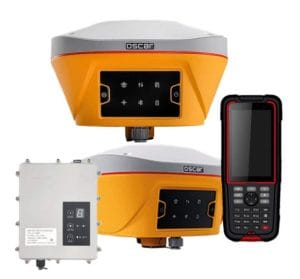
Pros: No line-of-sight needed; rapid data collection; single-person operation.
Cons: Accuracy can drop under heavy tree canopies (like in the Niger Delta forests) or near high-tension power lines.
Best For: Large-scale topographical mapping, route surveys for highways, and establishing geodetic control points.
💰 3. The Price Reality in Nigeria (2026 Estimates)
Budgeting is a major part of the decision. In the current market, prices for professional-grade gear at hubs like Ikeja Computer Village or Geoinfotech look like this:
| Equipment Type | Estimated Price (NGN) | Popular Brands in Nigeria |
| Manual Total Station | ₦3,500,000 – ₦16,000,000 | Leica, Hi-Target, South, Foif |
| GNSS RTK Base & Rover | ₦2,800,000 – ₦13,000,000 | CHCNAV, Hi-Target, ComNav, Leica |
| Robotic Total Station | ₦35,000,000+ | Leica TS16, Trimble S-Series |
🇳🇬 4. The “Nigerian Factor”: What Really Matters?
In Nigeria, “Better” isn’t just about specs; it’s about survival:
Signal Multipath: In Lagos, tall buildings can “confuse” GNSS signals. Here, the Total Station is non-negotiable.
Vegetation: Doing a survey in a thick palm grove? GNSS might lose “fix,” forcing you back to the Total Station.
Flooding & Drainage: For drainage projects in flood-prone areas, the vertical accuracy of a Total Station (paired with a Digital Level) is safer than GNSS.
🤝 5. The Pro’s Secret: The Integrated Approach
The best surveyors in Nigeria no longer choose one. They use an Integrated Workflow.
Use GNSS to quickly establish high-accuracy control points on-site.
Switch to the Total Station for the detailed “pick-up” and boundary work where precision is critical.
Final Verdict: Which Should You Buy?
Buy a Total Station if: You primarily handle construction, structural monitoring, or small urban plots in built-up areas.
Buy a GNSS Receiver if: You are scaling up to handle large estates, road corridor mapping, or regional surveys where speed is your competitive edge.
🛠️ Upgrade Your Toolkit Today
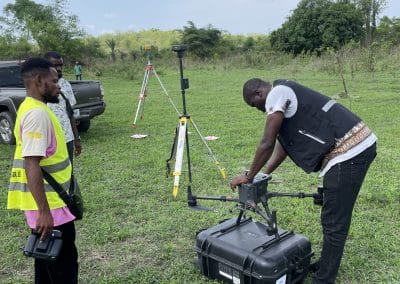
Ready to make the switch? Whether you need to buy cheap drone mapping software in Lagos to complement your GNSS or you’re looking for a Leica Total Station in Ikeja, ensure you buy from a dealer with local calibration and support services.