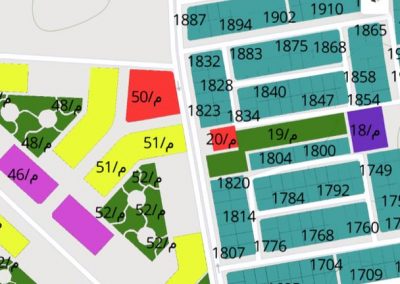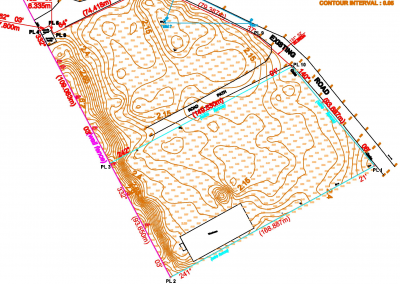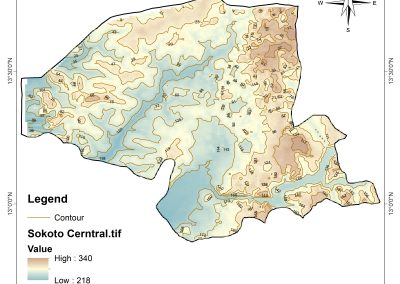
In Nigeria’s evolving surveying landscape, GIS (Geographic Information Systems) is no longer just a tool for multinational oil companies in Port Harcourt or government agencies in Abuja. Today, small, independent survey firms are using GIS to win more contracts, streamline workflows, and deliver “field-to-finish” results faster.
But with high licensing fees and the ever-tricky Naira-to-Dollar exchange, which GIS software truly makes sense for a small firm in 2025? Let’s break it down.
1. QGIS: The King of Affordability
If your firm is budget-conscious, QGIS is your best friend.
Cost: Free and open-source: No annual renewal fees in dollars.
Why it works in Nigeria: Supports almost all data formats surveyors need, including KML, Shapefiles, and DXF. The Semi-Automatic Classification plugin is perfect for land-use mapping in developing areas like Ibeju-Lekki or Mowe.
Downside: Steeper learning curve, no official customer support—you’ll rely on the global community and YouTube tutorials.
Best for: Small survey firms just starting out or keeping costs low.
2. Global Mapper: The All-in-One Workhorse
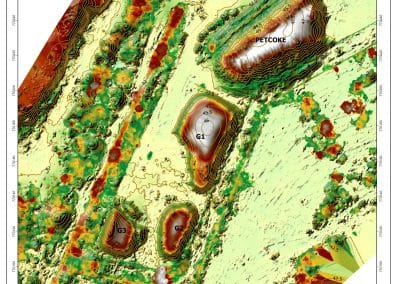
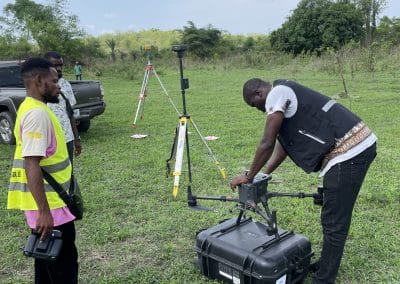
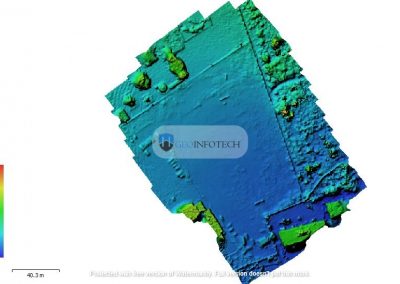
For firms handling LiDAR data, drone mapping, and 3D terrain, Global Mapper is a practical alternative to ArcGIS.
Key Feature: The “Pixels to Points” tool converts drone imagery into 3D point clouds without extra software.
Price Range: $600 – $1,800 (Pro version), making it a mid-range investment.
Best For: Topographic surveys, flood risk analysis, and drone mapping projects in Lagos, Delta, and other complex areas.
3. ArcGIS Pro: The Industry Gold Standard
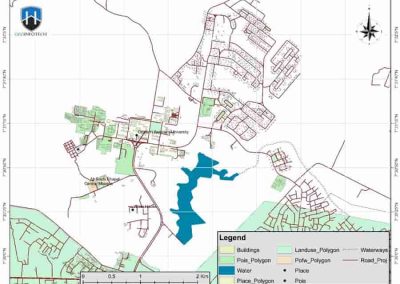
If your firm works with government agencies like AGIS, NISEPA, or state ministries—ArcGIS Pro is often a requirement.
Benefits: Advanced spatial analysis, professional map layouts, and outputs that pass any government audit.
Reality in Nigeria: Licensing costs can exceed ₦3,000,000 per year, but Esri Nigeria offers local support and training, which is invaluable for expanding teams.
Best For: Firms targeting high-paying corporate and government contracts.
4. AutoCAD Map 3D: The Bridge for Engineers
Many Nigerian surveyors already use AutoCAD for drafting. AutoCAD Map 3D allows you to layer GIS data like soil types, drainage networks, and zoning—on top of familiar CAD workflows.
SEO Tip: Ideal for surveyors collaborating on road construction, estate layouts, or civil engineering projects.
5. Mobile GIS: Field Data Collection Made Easy
Small firms are increasingly using mobile GIS apps to collect data directly in the field and sync it with office software:
Mergin Maps: Works perfectly with QGIS.
ArcGIS Field Maps: For firms in the Esri ecosystem.
SW Maps: A popular free Android app for quick boundary plotting and point collection in Nigeria.
Why it matters: Field data collection is no longer a bottleneck—your office can access real-time, accurate survey data from anywhere.
Comparison Table: GIS Software for Nigerian Survey Firms (2026)
| Software | Best For | Learning Curve | License Cost |
|---|---|---|---|
| QGIS | Budget-conscious firms | Medium/High | Free |
| Global Mapper | Drone & 3D analysis | Low | Moderate ($) |
| ArcGIS Pro | Government contracts | High | Expensive ($$$) |
| AutoCAD Map 3D | Engineering surveys | Low (CAD users) | Subscription |
Summary: Which GIS Should Your Firm Pick?
Start with QGIS if you are just beginning and want zero licensing costs.
Upgrade to Global Mapper Pro if your projects involve drone mapping and 3D terrain modeling.
Invest in ArcGIS Pro only when you are targeting government or high-value corporate contracts that demand it.
Final Thought
In 2026, a map is no longer just a drawing, it’s a database. Small survey firms that embrace GIS will manage land records better, avoid “Omonile” boundary disputes, and deliver high-value, decision-ready data to clients.