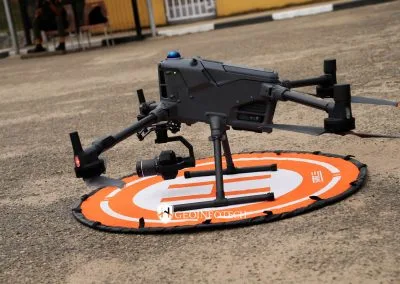

Picture the scene: an operator lands his DJI Agras T50 after the first tank run of the morning. The field is large. The treatment window is narrow. He reaches for the spare battery. There is none. The drone sits on the ground while he arranges sourcing or abandons the session entirely. One missing DB1560 battery in Nigeria does not just cost a few minutes. On a commercial farm, it can cost a harvest. This guide explains what the DB1560 does, why how many you own matters as much as the drone itself, and where to get genuine units in Lagos.
What the DB1560 Actually Is
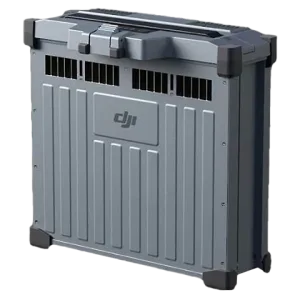
The DB1560 is the official intelligent flight battery for the DJI Agras T50 and T40. It is not a generic rechargeable pack. DJI engineered it specifically around the energy demands of heavy-payload agricultural operations. Furthermore, that distinction matters more than most operators initially appreciate.
The DB1560 carries 30,000 mAh at a nominal voltage of 52.22 volts, delivering 1,567 watt-hours of usable energy per charge. It uses lithium nickel manganese cobalt oxide cells. These cells balance high energy density, thermal stability, and strong discharge performance. As a result, the 11.5C discharge rate means the battery delivers high current even when the T50 carries a full 40-litre spray tank at operational speed.
In addition, an internal battery management system monitors cell voltage, current draw, and temperature in real time. It balances cells automatically across cycles. Furthermore, it protects against short-circuit, over-voltage, over-discharge, and over-temperature events. It also enters self-discharge mode during storage to preserve cell health between seasons.
Flight Time and Field Reality
Field conditions produce 6 to 10 minutes of flight per charge. That figure surprises some operators. However, it reflects the physics of lifting a 40-kilogram spray payload. The good news is that the workflow accounts for it.
On the T50, a full tank and a full battery deplete at roughly the same rate. Therefore, the drone returns not because the battery fails but because the tank needs refilling. The operator refills the tank and swaps the battery at the same moment. Furthermore, the C10000 charging station brings a depleted battery from 30 percent to 95 percent in 9 to 12 minutes. As a result, three batteries in rotation keep the drone in near-continuous operation.
In contrast, compress the battery count to one and a 50-hectare plot stretches across several interrupted days. The battery is not a minor accessory. It sets the entire operational rhythm of the system.
Built for Nigerian Conditions
Agricultural drone operations in Nigeria face genuinely demanding conditions. Therefore, understanding how the DB1560 handles them informs any long-term reliability assessment.
- Heat management: Nigeria’s temperatures accelerate degradation in standard lithium packs. However, the DB1560 uses advanced heat dissipation technology and an air-cooled heat sink during charging. It operates across ambient conditions from 32 to 140 degrees Celsius.
- Humidity and dust protection: the battery carries an IP54 rating combined with board-level potting protection. As a result, the electronics resist dust ingress and water splash from any direction during spray operations.
- Cycle longevity: 1,500 rated charge cycles means the DB1560 suits commercial-intensity use. Furthermore, an operator running three battery rotations daily through a farming season can expect several years of reliable service from a properly maintained pack.
- Storage behaviour: the DB1560 automatically enters self-discharge mode between seasons. Consequently, this prevents the deep discharge degradation that shortens batteries left fully charged or fully depleted for months.
How Many Batteries Does Your Operation Need?
Geoinfotech asks every operator this question before purchase. The answer directly determines whether an operation runs profitably or loses money to downtime.
Farms up to 30 hectares: two batteries provide adequate rotation if you split treatment sessions across a morning. However, three batteries eliminate any risk of an unplanned gap.
Farms of 30 to 80 hectares: three batteries is the practical minimum for continuous operation. In addition, this is the most common configuration for commercial farmers using the T50 as their primary treatment tool.
Drone service providers treating multiple farms per day: four to six batteries sustain full-day output without forced downtime. As a result, battery count becomes a direct input into daily revenue capacity.
Importantly, operators who start with one battery and plan to expand later consistently report that the gap period is their least productive time in the field. Getting the right count from the outset is therefore a better investment decision than buying more accessories later.
A Note on Genuine vs. Third-Party Batteries
The Nigerian market offers third-party battery units at lower prices than genuine DJI stock. However, the risks are specific. Third-party batteries do not integrate fully with the T50’s battery management system. As a result, the intelligent protections described above may function partially or not at all. A battery fault during flight can result in a drone crash, payload loss, and damage to standing crops.
In contrast, Geoinfotech supplies only genuine DJI DB1560 batteries. Every unit carries the standard DJI warranty of 1,500 cycles or 12 months, whichever comes first. For an asset in commercial agriculture, that assurance is a material part of the product’s value.
Where to Get the DB1560 Battery in Nigeria
Geoinfotech Resources Limited stocks the genuine DB1560 battery in Nigeria and supplies operators across the country from our Lagos base. Whether you buy your first T50 and need the right battery count from the start, expand an existing fleet, or replace a pack that reached end of cycle life, we advise on quantity, configuration, and care.
Reach out to us directly. Discuss your farm size, daily treatment targets, and current battery setup. Above all, getting the power side right is one of the most straightforward ways to improve field productivity without changing anything else.
The drone gets the attention. The battery keeps it flying.